
Key Takeaways
- Zero-VOC paint has a stricter limit than low-VOC paint, but “zero” is a threshold, not a complete absence of VOCs.
- Adding color can bring VOCs back into a zero-VOC base, especially in deep tints.
- The VOC number on the label measures what’s in the can, while emissions certifications measure what’s released into the room.
- Modern low-VOC and zero-VOC paints both perform well, though results vary by product and surface.
- California has some of the strictest paint rules in the country, so standard paint sold in the Bay Area already meets tighter VOC limits than federal rules require.
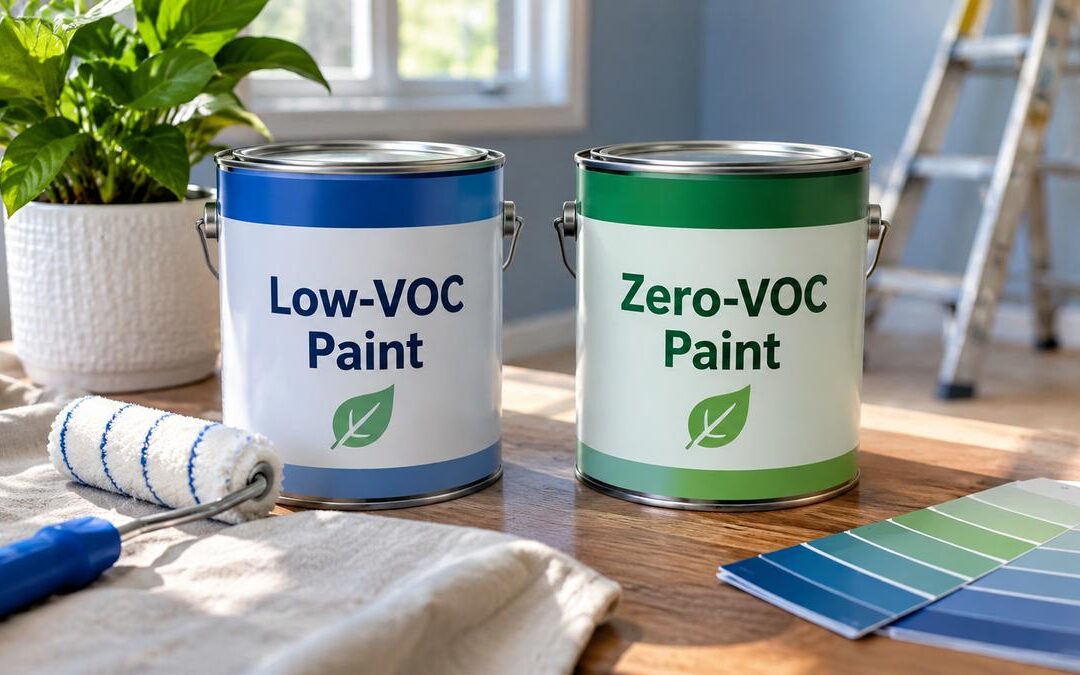
Low-VOC paint limits fumes to a reduced level, while zero-VOC paint must stay under 5 grams per liter. Both improve indoor air, but zero-VOC is the stricter standard.
If you’ve stood in a paint store comparing labels, you’ve probably seen “low-VOC,” “zero-VOC,” and “no-VOC” printed on cans that look almost identical. The difference matters most in bedrooms, nurseries, and homes where someone is sensitive to odors. This guide explains Low-VOC vs Zero-VOC Paint in plain terms, so you know what you’re actually buying. If you’re new to VOCs in general, our guide on what low-VOC means covers the basics and the health benefits in more detail.
Low-VOC vs. Zero-VOC Paint: The Key Differences at a Glance
VOCs, or volatile organic compounds, are chemicals that evaporate into the air as paint dries. They cause the “fresh paint” smell and can irritate the eyes and lungs.
How the Two Compare
| Low-VOC Paint | Zero-VOC Paint | |
| VOC level | Reduced; commonly cited as 50 g/L or less for flat finishes and 150 g/L or less for other sheens | Commonly defined as 5 g/L or less |
| Odor | Mild | Very Faint |
| Color and sheen choices | Very wide | Wide, but tinting can add VOCs |
| Best for | Most rooms, trim, high-traffic areas, exteriors | Bedrooms, nurseries, and sensitive households |
The Short Version
Low-VOC paint works well in most homes. Zero-VOC paint goes further when air quality is the top priority.
What About “No-VOC” Paint?
You’ll also see “no-VOC” on some labels. In most cases, manufacturers use it the same way as zero-VOC, meaning the paint falls below the same very low threshold. When in doubt, check the actual number on the product’s data sheet.
What “Zero-VOC” Actually Means (and Why It Isn’t Zero)
A Limit, Not an Absence
“Zero-VOC” sounds like the paint contains no VOCs at all. In practice, it means the paint falls below a very low threshold, commonly 5 grams per liter. Trace amounts can still be present.
Measured Before Color Is Added
That VOC number is usually measured on the untinted base paint. Mixing in color can change it.
Zero-VOC Isn’t the Same as Non-Toxic
VOCs are only one group of chemicals in paint. A zero-VOC label doesn’t mean a product is free of every ingredient you might want to avoid.
How Tinting Can Add VOCs Back Into “Zero-VOC” Paint
Why Colorants Matter
Many standard colorants contain their own VOCs. When a store tints a zero-VOC base, those colorants can raise the VOC level of the finished paint. Light colors need little colorant, while deep blues, reds, and dark grays need much more.
How to Keep It Truly Low
Several major brands offer zero-VOC colorant systems that keep tinted paint at the zero-VOC level. When you buy paint, or when your painter orders it, ask whether the colorant system is zero-VOC as well. For a nursery, a lighter color also keeps added VOCs down. If you’re unsure, ask for the VOC level of the tinted paint, not just the base. A good painter will know a few good questions to ask before the paint is mixed.
VOC Content vs. Emissions: Which Certifications to Trust
What the Label Measures
The VOC number on a can tells you how much is in the paint. It doesn’t tell you how much is released into the room over the days and weeks after painting, and that’s what affects your indoor air.
Certifications That Test Emissions
Independent emissions certifications test the dried paint in a chamber and measure what it releases over time. The most widely recognized include:
- GREENGUARD Gold (UL): a strict standard designed with sensitive spaces like schools and healthcare settings in mind.
- CDPH Standard Method (often called Section 01350): California’s testing method for emissions from building products.
- Green Seal (GS-11): a standard for paints and coatings that covers VOC content and other environmental criteria.
Why This Matters
For a nursery or a home with allergies, a paint with a trusted emissions certification gives you more confidence than the VOC number alone.
Where to Find This Information
Most manufacturers list VOC content and certifications on the product data sheet, the safety data sheet, or the product page on their website. The data sheet is the most reliable place to compare products.

Does Zero-VOC Paint Perform as Well as Low-VOC Paint?
Coverage and Durability
Early zero-VOC paints had a reputation for weak coverage. Today’s products from established brands perform far better, and many hold up well on walls and ceilings. Results still vary by product.
Drying, Touch-Ups, and Cleaning
Some zero-VOC paints dry quickly, which can make it harder to keep a wet edge on large walls and may show lap marks if they’re rushed. Touch-ups can also show more with some formulas. For kitchens, bathrooms, hallways, and trim, check that the product you choose is rated for scrubbing and moisture.
Prep Still Matters Most
No paint performs well over poor preparation. Cleaning, patching, sanding, and the right primer have a bigger effect on how long a paint job lasts than whether the paint is low-VOC or zero-VOC.
Primers and Sheens
Low-VOC and zero-VOC primers are widely available, so the whole system can stay low in VOCs. Walls that have just had drywall repairs or wallpaper removal usually need a primer before the finish coat. Higher sheens, like semi-gloss, are tougher and easier to clean, which is why they’re common on trim and in bathrooms.
Low-VOC Paint Rules in California and the Bay Area
Some of the Strictest Limits in the Country
California regulates VOCs in architectural paints more strictly than federal rules do, and local air districts, including the Bay Area Air Quality Management District, set limits on the paints sold and used here. As a result, much of the standard paint on Bay Area store shelves already meets or comes close to low-VOC levels.
What That Means for You
In the Bay Area, the gap between “regular” and “low-VOC” paint is smaller than in many other states. Zero-VOC paint and emissions-certified products are where you’ll see the biggest additional difference, especially in closed rooms or homes with sensitive occupants.
Older Homes Still Need Extra Care
Many Marin homes and older Bay Area buildings were painted before 1978, when lead-based paint was still common. Choosing low-VOC or zero-VOC paint doesn’t change how old layers need to be handled. Sanding or scraping older paint should follow lead-safe practices, and it’s also the right time to repair any rotted wood before new paint goes on.
Which Should You Choose? Low-VOC vs. Zero-VOC by Room and Project
Bedrooms and Nurseries
Zero-VOC paint with an emissions certification and a zero-VOC colorant system is the strongest choice.
Kitchens, Bathrooms, and Hallways
A durable, scrubbable low-VOC or zero-VOC paint rated for moisture works well. Performance should come first here.
Trim, Doors, and Cabinets
These surfaces need a hard, durable finish. High-quality low-VOC enamels are often the more practical option.
Exteriors
Fumes disperse quickly outdoors, so zero-VOC matters less here. Focus on weather resistance and durability. For an exterior repaint, prep matters most.
Occupied Homes and Businesses
If people will keep living or working in the space during the job, low odor matters more. Offices, retail stores, and HOA common areas often stay open while they’re painted, so low-VOC or zero-VOC products help keep the space usable.
Don’t Forget the Other Products
Primers, caulks, stains, and sealers can contain VOCs too. Choosing low-VOC versions of these keeps the whole job consistent.
Not Sure Which Paint Is Right for Your Home or Business?
Understanding Low-VOC vs Zero-VOC Paint comes down to knowing what the labels really measure. Zero-VOC paint sets the stricter limit, low-VOC paint offers wide choices and proven performance, and tinting, certifications, and the other products on the job all affect the air in your space.
At McCarthy Painting, we provide residential painting across Marin County and commercial painting across San Francisco and the Bay Area, including specialized protective coatings, surface preparation, and long-lasting exterior solutions. Our team ensures proper application and durability for both homes and commercial properties, delivering high-quality finishes built to withstand time and weather.
Contact us today at 415-383-2640 to schedule your free estimate, or explore our Residential, Commercial, and Our Services pages to learn more.

Frequently Asked Questions
Is it safe to sleep in a room painted with zero-VOC paint the same night?
Many people do, especially with good ventilation, since zero-VOC paint has very little odor. Paint keeps curing after it feels dry, so airing the room out is still wise.
Is low-VOC or zero-VOC paint safe to use while I’m pregnant or in a nursery?
Zero-VOC paint with an emissions certification is the most common choice for nurseries. If you’re pregnant, check with your doctor, keep the room well ventilated, and let someone else do the painting.
Can I paint over oil-based or high-VOC paint with zero-VOC paint?
Yes, with the right preparation. Glossy or oil-based surfaces need cleaning, light sanding, and a compatible bonding primer so the new water-based paint adheres properly.
Does zero-VOC paint take longer to cure than low-VOC paint?
Not necessarily. Many zero-VOC paints dry to the touch quickly, but full curing can still take days or weeks depending on the product, humidity, and temperature. Wait before scrubbing or hanging anything on fresh walls.
Are zero-VOC paints available in every sheen?
Most major zero-VOC lines come in common sheens like flat, eggshell, satin, and semi-gloss, but the choices can be narrower than with low-VOC paint. A professional painter can help you match the right sheen to each room.

Editorial Review by Greg Owens, Owner & CEO, McCarthy Painting Company
Greg Owens is the Owner and CEO of McCarthy Painting Company, a family-owned painting contractor serving Marin County and the San Francisco Bay Area since 1969. Having worked with the company since 1990, Greg has more than three decades of hands-on experience in residential and commercial painting, surface preparation, protective coatings, wood restoration, and long-term property maintenance. Under his leadership, McCarthy Painting has completed projects for homeowners, commercial property managers, and organizations throughout the Bay Area while maintaining a reputation for quality craftsmanship, professionalism, and exceptional customer service. Greg reviews educational content to help property owners make informed decisions about painting, maintenance, and protecting their investment.