
Key Takeaways
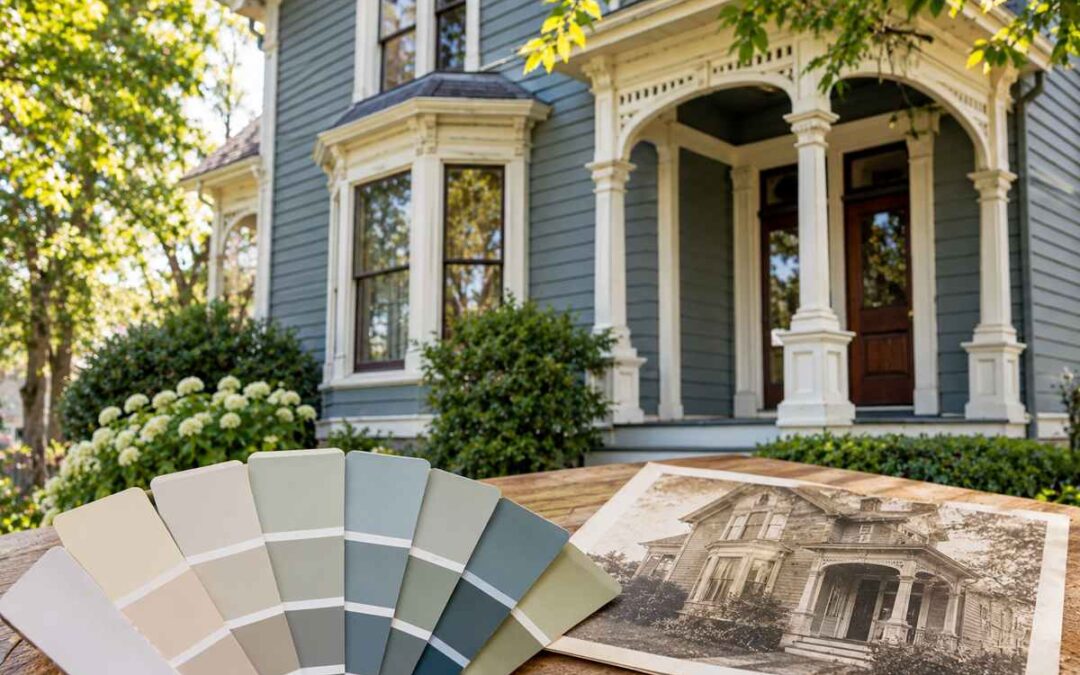
- Historic paint colors are shades based on the colors used during a home’s original era, often sold as curated collections.
- Each style has its own palette, from deep Victorian tones to earthy Craftsman colors and mid-century accents.
- Your home’s original colors are often hidden under later layers and can be uncovered with careful investigation.
- Bay Area fog, sun, and salt air affect how long historic exterior paint colors hold their richness.
- Historic districts and HOAs may limit color choices, so check before you commit.
Choose colors for an older home by matching its architectural style and era, checking for original colors, placing body, trim, and accents thoughtfully, and confirming local rules.
An older home has a story built into its trim, windows, and siding, and color is one of the best ways to tell it. The right historic home paint colors highlight details that make an older house special, while the wrong ones can flatten them or make a Victorian look like a new build. At McCarthy Painting, we’ve painted homes across Marin County and San Francisco since 1969. This practical guide walks through how to choose colors that respect your home’s history while still feeling right today.
What Makes a Paint Color “Historic”?
Colors Rooted in a Specific Era
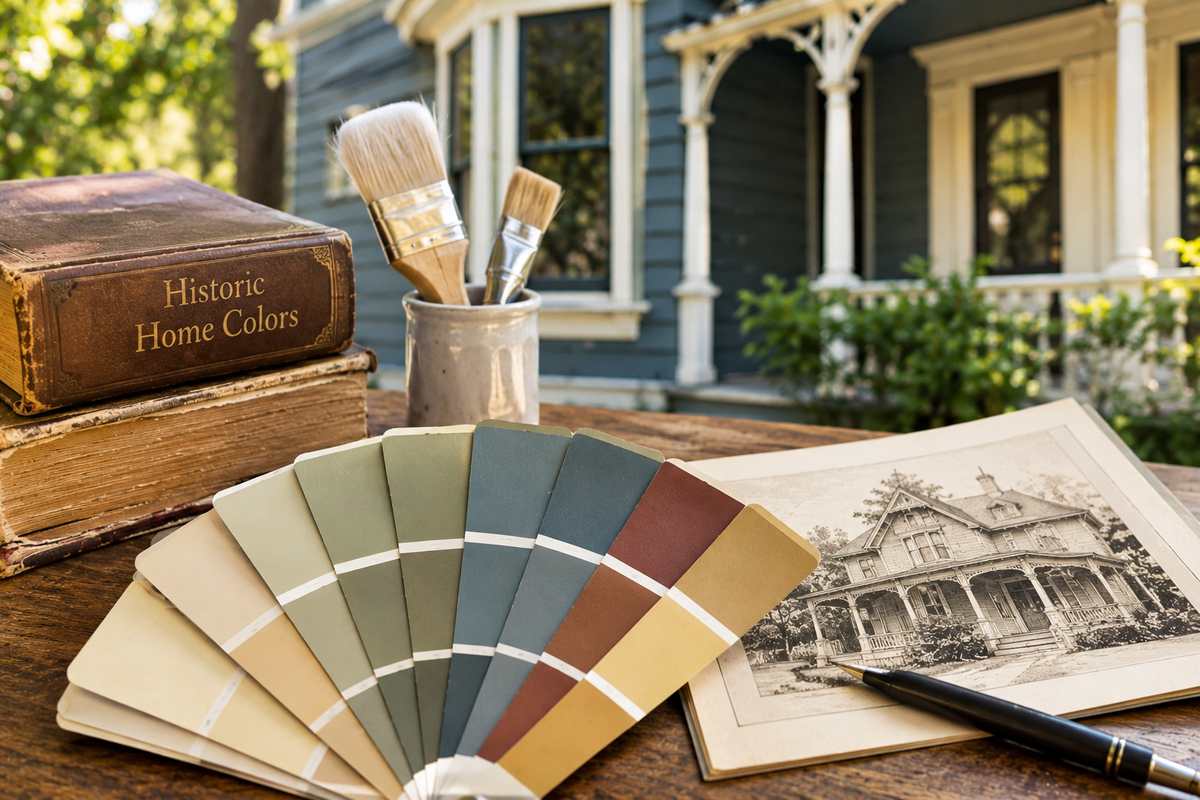
A historic paint color is based on the colors actually used during a particular period of architecture. Early paints were limited by the pigments available, so many colors from the 1800s and early 1900s lean earthy and complex rather than bright and clean. That’s a big part of why they look “right” on older homes. Earth pigments like iron oxides, umbers, and ochres were affordable and durable, which is why so many period colors have warm, mineral undertones.
Curated Historic Collections
Several major paint makers offer historic paint colors in curated collections, such as Benjamin Moore’s Historical Collection and Sherwin-Williams’ historic palettes. Some brands also work with preservation groups, like Historic New England, to research their colors. These collections are a helpful starting point because the colors have already been grouped by style or period.
Accurate Versus Inspired
Not every historic color is a perfect recreation. Some are researched matches to original paint, while others are inspired by an era. For most homeowners, a color that suits the style is more important than an exact match, unless you’re restoring a landmark.
Historic Color Palettes by Home Style
Victorian Homes
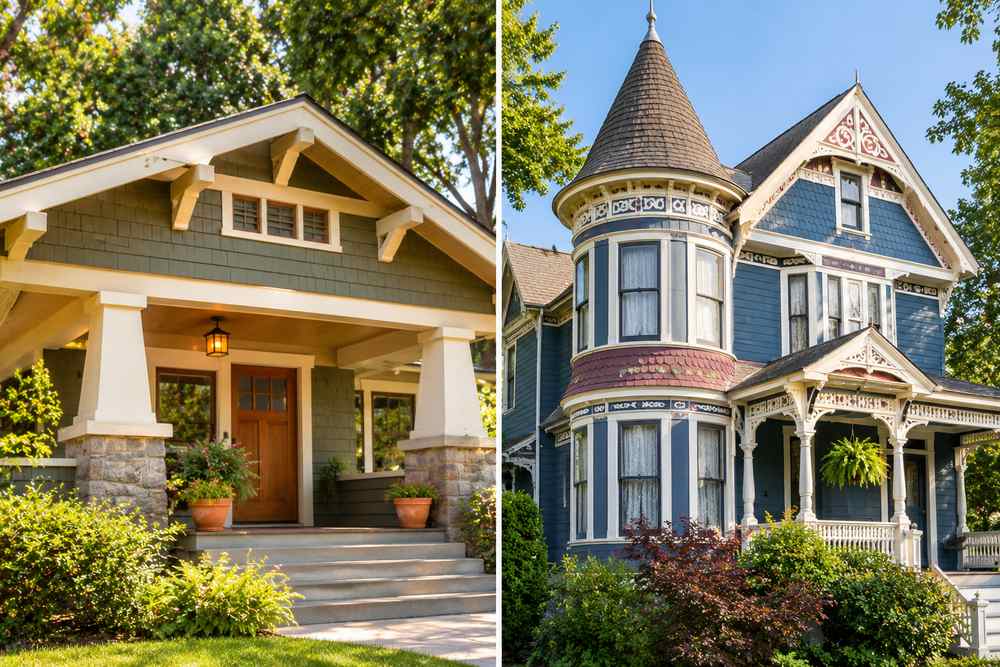
Victorian homes, including the Queen Anne and Italianate styles common in San Francisco and older Marin neighborhoods, were built to show off their details. Traditional victorian house paint colors were often deep and rich: olive greens, deep reds, warm browns, and ochres, with several colors used to highlight trim, brackets, and window details. The brightly colored “Painted Ladies” style that San Francisco is famous for became popular much later, so both approaches can work depending on the look you want. Either way, it isn’t unusual to see three or more colors working together on a Victorian facade.
Craftsman Bungalows
Craftsman homes are tied to nature and handcraft. Their palettes favor earthy greens, browns, warm tans, and muted reds, often paired with natural wood tones. Trim is usually a darker or contrasting color rather than bright white. Porches, exposed rafter tails, and wide window casings give these homes plenty of details worth picking out in a second shade.
Colonial Revival Homes
Colonial Revival homes tend to be lighter and more formal. White, cream, pale yellow, and soft gray bodies are common, often with white trim and dark green or black shutters and doors. Symmetry is a defining feature of the style, so colors are usually applied evenly across the front of the house.
Mid-Century and Eichler Homes
Mid-century homes, including the Eichlers found in Terra Linda, Lucas Valley, and Marinwood, often pair muted, earthy body colors with a bold accent, usually on the front door. The clean lines of these homes look best with simple color placement rather than many contrasting details.
How to Find Your Home’s Original Colors
Look Where Paint Has Been Protected
Original colors often survive in protected spots, such as behind shutters, under hardware, inside closets, or on trim that was covered later. Carefully scraping or sanding a small area can reveal layers of paint, like rings in a tree. Because older homes may have lead paint in those layers, this should be done using lead-safe practices.
Check Old Photos and Records
Old photographs, even black-and-white ones, show whether trim was lighter or darker than the body. Local historical societies, previous owners, and neighbors with similar homes can also offer clues. Keep in mind that old paint changes over time. Older oil-based paints can yellow, darken, or fade, so the color you uncover may not be exactly what was first applied.
Get Professional Help for Exact Matches
For a landmark or a detailed restoration, a paint analysis can identify original colors more precisely. A professional painter can then match those colors in modern exterior paint.
How to Choose a Historic Color Scheme, Step by Step
Step 1: Identify Your Home’s Style and Era
Start with the architecture. A Craftsman and a Queen Anne Victorian built in the same decade can call for very different palettes.
Step 2: Start From Original Colors or a Historic Collection
If you found original colors, use them as your foundation. If not, choose from a historic collection that matches your home’s style.
Step 3: Choose the Body Color
The body color covers the most surface, so it sets the overall mood. It should look good from the street and fit the neighborhood. Slightly muted, earthier body colors usually look more natural on older homes than very bright or very cool modern grays.
Step 4: Choose Trim and Accent Colors
Trim frames windows, doors, and corners, while accents highlight smaller details like window sashes, brackets, and the front door. On a Victorian, accents can bring out decorative trim. On a mid-century home, one bold accent is usually enough.
Step 5: Check the Rules
Before deciding, confirm any historic district or HOA requirements, covered below.
Step 6: Test Colors on the House
Paint large samples on different sides of the home and look at them at different times of day before making a final choice.
How Bay Area Weather Affects Historic Colors
Sun and Fading
South- and west-facing walls take the most direct sun, which can fade deep, saturated colors faster. Rich reds and dark greens look beautiful on older homes, but they need quality exterior paint with strong fade resistance.
Fog and Moisture
Foggy, shaded areas in Mill Valley, San Francisco, and parts of Marin hold moisture longer, which can encourage mildew. Good surface preparation and mildew-resistant products help historic exterior paint colors stay clean and true. Walls that rarely dry out also benefit from regular gentle washing, which keeps deep colors from looking dull or chalky.
Salt Air Near the Water
Homes near the bay in Sausalito, Tiburon, and Belvedere face salt air and wind, which wear down paint faster. Choosing durable coatings matters as much as choosing the right color.
Historic Districts, HOAs, and Color Approvals
Historic Districts
Some cities review exterior changes for homes in historic districts or on landmark lists, while others don’t regulate paint color at all. Rules vary from city to city, so check with your local planning department before painting.
HOAs
Homeowner associations often have approved color palettes or require board approval for exterior color changes. Get approval in writing before work starts. If your HOA has a pre-approved palette, compare it with a historic collection. You’ll often find shades that satisfy both.
Plan Approval Into Your Timeline
If approval is needed, start the process early so it doesn’t delay your painting schedule.
Ready to Bring Your Older Home’s Colors Back to Life?
Historic home paint colors are more than a style choice. They’re a way to honor your home’s architecture, highlight its details, and protect its character for years to come.
At McCarthy Painting, we provide expert residential and commercial painting services across San Francisco, Marin, and surrounding California areas, including specialized protective coatings, surface preparation, and long-lasting exterior solutions. Our team ensures proper application and durability for both homes and commercial properties, delivering high-quality finishes built to withstand time and weather.
Contact us today at 415-383-2640 to schedule your free estimate, or explore our Residential, Commercial, and Our Services pages to learn more.
Frequently Asked Questions
Do I have to use historically accurate colors on an older home?
Not usually. Unless your home is in a historic district or HOA with color rules, the choice is yours. Many homeowners choose colors that suit the style without being exact matches.
Can I use modern colors on a Victorian house?
Yes. Many Victorians look great with updated palettes. The key is keeping enough contrast to show off the trim and details that make the style special.
What are timeless exterior colors for older homes?
Warm whites, soft creams, muted greens, deep blues, and earthy grays tend to age well on older homes because they work with traditional architecture rather than against it.
Are historic paint colors available in low-VOC paints?
In most cases, yes. Major paint makers can mix many of their historic colors into their low-VOC product lines, so you can choose an authentic color with a lower-odor paint.
Do historic color collections work for interiors too?
Yes. Many historic collections include interior colors, which can help connect the inside of an older home to its exterior style.

Editorial Review by Greg Owens, Owner & CEO, McCarthy Painting Company
Greg Owens is the Owner and CEO of McCarthy Painting Company, a family-owned painting contractor serving Marin County and the San Francisco Bay Area since 1969. Having worked with the company since 1990, Greg has more than three decades of hands-on experience in residential and commercial painting, surface preparation, protective coatings, wood restoration, and long-term property maintenance. Under his leadership, McCarthy Painting has completed projects for homeowners, commercial property managers, and organizations throughout the Bay Area while maintaining a reputation for quality craftsmanship, professionalism, and exceptional customer service. Greg reviews educational content to help property owners make informed decisions about painting, maintenance, and protecting their investment.