
Key Takeaways
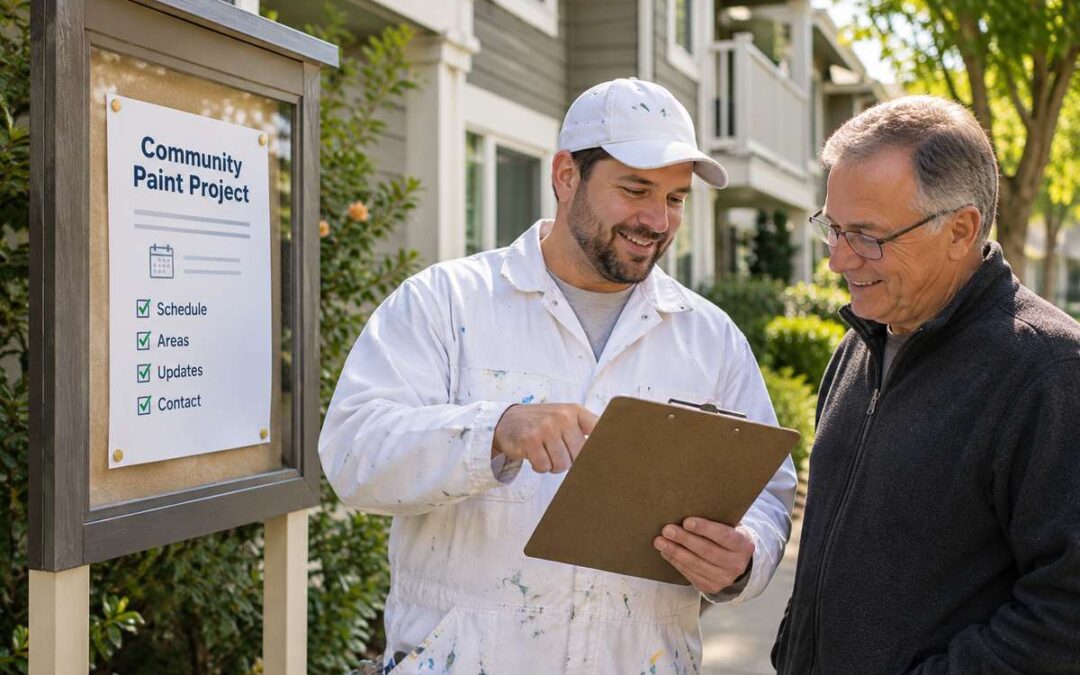
- The board approves the project, a liaison shares updates, and the painter supplies the dates and details residents need.
- Small complexes can hear from the painter directly, while larger ones usually work best through one liaison.
- Residents should get notice when the project is approved, before work starts, and again before the crew reaches their unit.
- A good painting notice to residents covers dates, work hours, what to move, what to expect, and who to contact.
- Weather changes and touch-up requests are where communication matters most.
Painters keep HOA residents informed through clear roles, written notices with dates and instructions, timely schedule updates, and one contact for questions and touch-ups.
Ask any HOA board what makes a repaint go wrong, and the answer is rarely the paint. It’s the surprise: a resident who finds a ladder outside their bedroom window, a car that needed moving, or a notice that arrived the day before. A clear painting notice to residents, backed by steady updates, prevents most of that. Greg Owens, owner of McCarthy Painting, has painted HOAs and condo complexes across Marin County for decades, and he sees communication as one of the biggest parts of the job. “Each HOA has their own methods for wanting to communicate with the residents,” he says, and a good painter works within them.
Who Keeps Residents Informed: The Painter, the Board, or a Liaison?
Communication on an HOA repaint works best when everyone knows their part.
The Board
The board approves the scope, the budget, the colors, and the overall schedule. It also makes the official announcement, since residents expect major decisions to come from their association. Many boards also mention the project at a regular meeting or in a newsletter, so it never comes as a surprise.
The Liaison
Most boards name one person as the go-between: often the board president, a property manager, or another appointed member. The liaison passes updates from the painter to residents and brings resident concerns back to the painter, so messages stay consistent. The liaison doesn’t need to know much about painting, just be someone residents trust and can reach easily.
The Painter
The painter knows the details residents care about most: which building is next, what time crews arrive, what needs to be moved, and when areas will be finished. A good contractor shares it clearly and early.

How Communication Changes With the Size of the Complex
Smaller Complexes: Talking to Each Owner
In a complex of four, eight, or 10 units, it’s practical for the painter to speak with each owner directly. As Greg puts it, “it’s very easy for us just to be able to talk to each one of those owners and to tell them like, ‘Hey, on Monday we’re going to be starting outside your unit.’” It answers questions on the spot and builds trust. Greg recently met with the board of a 10-unit HOA in Novato, the kind of community where owners care about their own units and want to put a face to the company working on their homes.
Larger Complexes: Working Through a Liaison
Once a community reaches roughly 12 to 15 units or more, individual conversations get harder to manage. In Greg’s experience, that’s when a single liaison works best: “we talk to that one person and then that one person updates the many.” This keeps the message consistent and avoids residents hearing different answers from different people. The liaison can then share updates through whatever channel the community already relies on, such as an email list or a group text.
When Residents Should Hear From the Painter
When the Project Is Approved
As soon as the board signs off, residents should get a general heads-up: what’s being painted, the expected season, and who the contractor is. This early notice gives people time to plan around travel or other commitments. Sharing the contractor’s name also helps residents recognize the crew when they arrive.
Before Work Starts
A more detailed exterior painting notice should go out a week or two before the crew arrives. This is where specific dates, work hours, and preparation steps belong.
Before the Crew Reaches Each Unit
On larger projects, crews move from building to building. A reminder a few days before work reaches each building or unit helps residents move cars, plants, and patio furniture in time. For example, a reminder might say that Building C starts Tuesday, with power washing first and painting later in the week.
When Each Area Is Finished
A short note when a building is done lets residents know they can put things back and when to expect a final walkthrough
.
What to Include in a Painting Notice to Residents
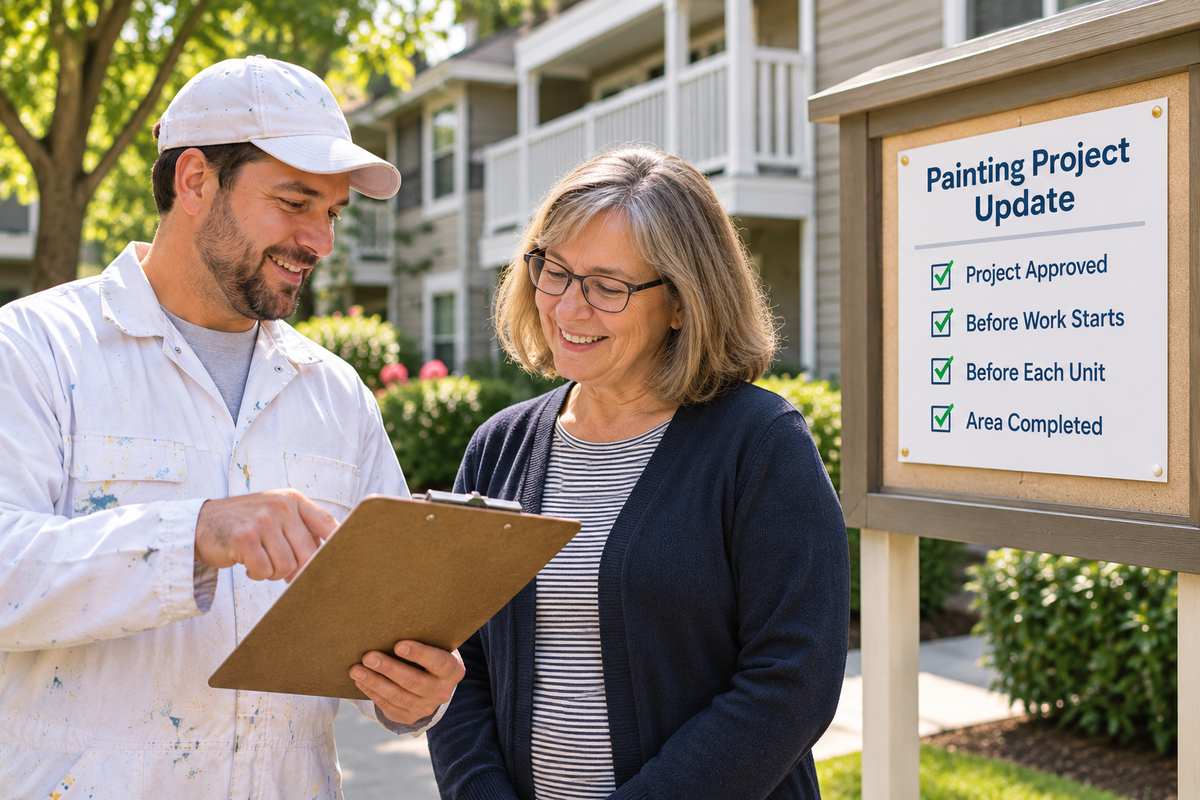
A good notice answers the questions residents would otherwise call about. Keep it short, specific, and easy to scan.
The Essentials
- Dates and work hours: the start date, the expected finish, and daily hours (for example, 8 a.m. to 4:30 p.m., Monday through Friday).
- Which areas are included: buildings, units, decks, railings, garage doors, or common areas.
- What residents need to do: move cars, plants, patio furniture, and decorations, and keep windows closed while nearby surfaces are being sprayed or painted.
- What to expect: ladders, power washing, some noise, and areas with wet paint.
- Parking or access changes: any spaces, walkways, or entrances that will be blocked, and for how long.
- Who to contact: one name and phone number or email for questions.
How to Send It
Many HOAs use a mix of methods: an email to all owners, a printed notice on each door, and a posting in common areas. The best method is the one the association already uses, so residents know where to look. Whatever the method, keep the same contact name on every notice.
Keeping Residents Updated When the Schedule Changes
Weather Delays
In Marin County, exterior painting can happen year-round as long as it isn’t raining. When a storm comes through, crews usually wait a couple of days for the building to dry before continuing. Greg notes that in a wet winter, especially in January and February, “it can rain every single day,” which can push exterior work back. Residents should hear about any delay as soon as it’s known, along with the new expected dates. A short message on the morning of a rain day, letting residents know the crew won’t be on site, saves a lot of confusion.
Other Changes
Repairs found during prep, such as dry rot discovered while scraping, can also affect timing. A good painter tells the liaison what was found, what it means for the schedule, and when work will resume, so the board can update residents with accurate information instead of guesses.
Handling Resident Questions and Touch-Up Requests
One Clear Point of Contact
Whether it’s the liaison or the painter’s project manager, residents should know exactly who to call. One contact prevents mixed messages and makes sure nothing falls through the cracks.
Collecting Touch-Ups
Small misses happen, like a drip on a railing or a spot missed behind a light fixture. The best approach is to collect these requests in one list as the job progresses, then address them together. Some boards also ask residents to walk around their own unit after the crew finishes and add anything they notice to the list.
The Final Walkthrough
At the end of the project, the painter walks the property with the board or liaison, reviews the touch-up list, and confirms everything is complete. At McCarthy Painting, Greg often meets with the board himself, so the people responsible for the property can ask questions directly.
Ready to Plan an HOA Repaint That Keeps Every Resident in the Loop?
A thoughtful painting notice to residents, timely updates, and one clear contact turn an HOA repaint from a disruption into a well-run project. When owners know what’s happening and when, they feel respected, the board fields fewer complaints, and the work stays on schedule.
At McCarthy Painting, we provide expert residential and commercial painting services across San Francisco, Marin, and surrounding California areas, including specialized protective coatings, surface preparation, and long-lasting exterior solutions. Our team ensures proper application and durability for both homes and commercial properties, delivering high-quality finishes built to withstand time and weather.
Contact us today at 415-383-2640 to schedule your free estimate, or explore our Residential, Commercial, and Our Services pages to learn more.
Frequently Asked Questions
Do I need to be home while my unit is being painted?
Usually not for exterior work. Most painting can happen whether or not you’re home, as long as the crew can reach the areas around your unit. Your notice should say if access to a patio, balcony, or garage is needed.
What happens if I’m away on the dates my building is scheduled?
Let the liaison or painter know ahead of time. They can tell you what to move before you leave, or arrange a way to handle items you can’t move yourself.
Are there legal notice requirements for HOA painting projects in California?
Notice rules depend on your association’s governing documents and California law. The board should review its CC&Rs and, when unsure, check with the association’s manager or attorney before the project begins.
Who do I contact if something gets damaged during the repaint?
Contact the person named in your notice right away, usually the liaison or the painter’s project manager. Report the issue with photos so it can be reviewed and resolved quickly.
How will residents find out about paint color choices or samples?
Color decisions usually come from the board, often within the HOA’s existing color rules. Many boards share samples in a common area or by email so residents can see the choices before work begins.

Editorial Review by Greg Owens, Owner & CEO, McCarthy Painting Company
Greg Owens is the Owner and CEO of McCarthy Painting Company, a family-owned painting contractor serving Marin County and the San Francisco Bay Area since 1969. Having worked with the company since 1990, Greg has more than three decades of hands-on experience in residential and commercial painting, surface preparation, protective coatings, wood restoration, and long-term property maintenance. Under his leadership, McCarthy Painting has completed projects for homeowners, commercial property managers, and organizations throughout the Bay Area while maintaining a reputation for quality craftsmanship, professionalism, and exceptional customer service. Greg reviews educational content to help property owners make informed decisions about painting, maintenance, and protecting their investment.