
Key Takeaways
- Roughly 44 percent of DIYers report making a mistake serious enough to redo their work
- Up to 80 percent of paint failures trace back to poor surface preparation, not the paint itself
- Professional house painters bring specialized tools, from sprayers to proper ladders, that most homeowners don’t own or know how to use safely
- A rushed DIY job can fail within a couple of years, while a properly prepped and applied professional job can hold up for a decade or more
- DIY still makes sense for small, low-stakes rooms where the timeline and finish quality matter less
- McCarthy Painting has delivered professional residential and commercial painting results across the San Francisco Bay Area since 1969
Professional house painters deliver longer-lasting, higher-quality results than DIY painting because of proper surface prep, better tools, and years of hands-on technique.
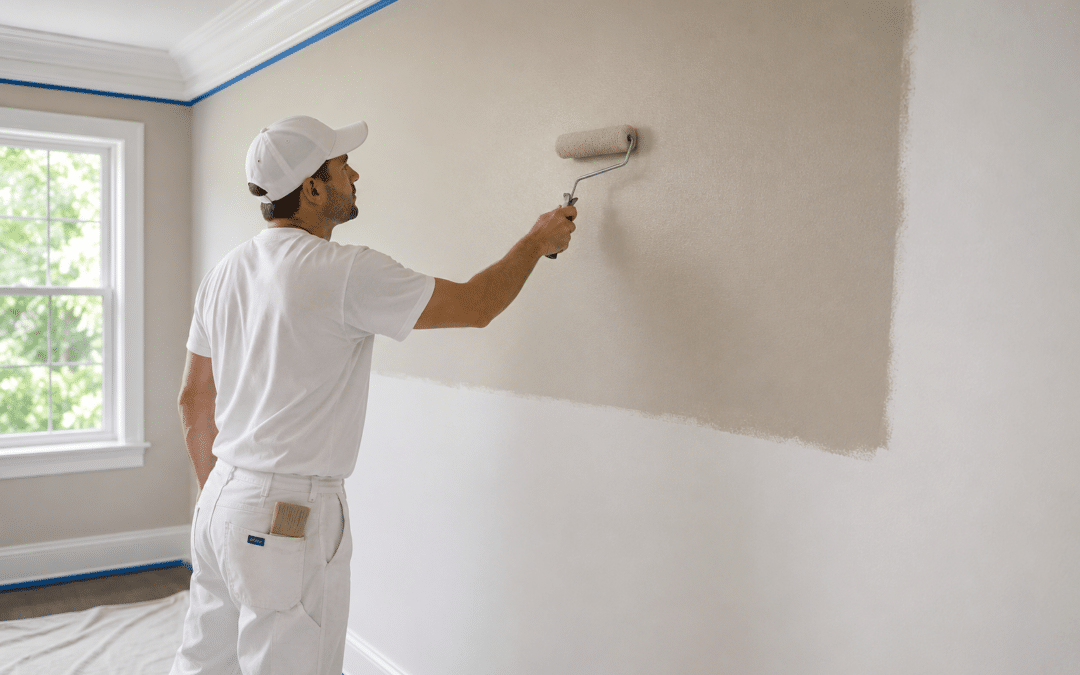
Painting a room looks simple enough from the outside. Buy a can of paint, grab a roller, and go. But anyone who’s actually tried it knows the gap between “looks easy” and “turns out well” is wider than expected. Streaks show up where you didn’t expect them. The color looks different once it dries. And the trim that seemed straightforward to cut in ends up taking twice as long as planned.
That gap is exactly why professional house painters consistently deliver better results than DIY projects. It’s not about effort or intelligence. It’s about the accumulated experience of doing the same motions thousands of times, the tools that make a job faster and cleaner, and the judgment to catch problems before they become expensive ones. This article breaks down where that difference actually comes from, what it costs you to skip it, and when DIY still makes sense.
DIY vs. Professional Painting: What’s the Real Difference?
The core difference isn’t really about paint at all. It’s about preparation, technique, and the tools behind both.
Reps Matter More Than You’d Think
A professional painter has done the same motions thousands of times: the correct pressure on a brush, the right angle for cutting in a clean line, the pacing that avoids lap marks when rolling a wall. A first-time DIYer is learning all of this in real time, on their own living room wall. That’s fine for a closet nobody sees. It’s a bigger problem for a space you look at every day.
It’s Not Just About Skill, It’s About Systems
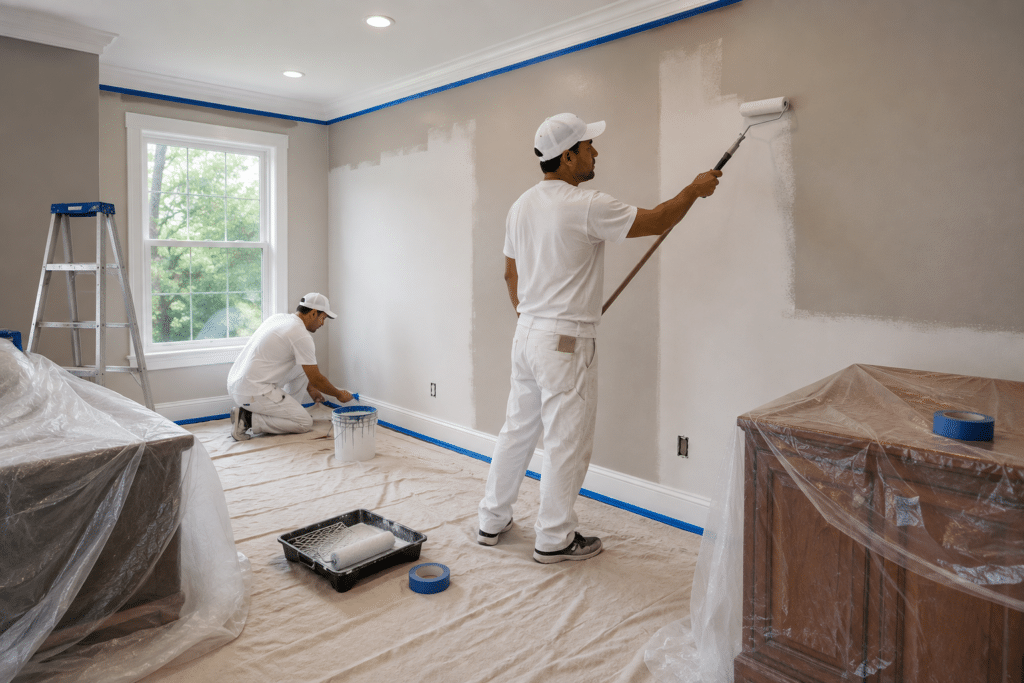
Professional house painters also bring a repeatable process: how to sequence rooms, how to protect floors and furniture, how to sequence coats so drying time doesn’t slow the whole job down. DIYers are figuring this out project by project, which is part of why the same job takes a professional crew a fraction of the time.
The Hidden Costs of DIY Painting Projects
DIY painting looks cheaper on paper. The real cost shows up later, once mistakes, materials, and redo work get added in.
The Redo Problem Is More Common Than You’d Expect
Survey data on home improvement projects has found that roughly 44 percent of DIYers report making a mistake serious enough that they had to redo the work. That’s not a small minority. It’s closer to a coin flip. When a DIY paint job needs to be redone, you’re not just losing the first round of paint and supplies, you’re often paying more overall than if you’d hired a professional from the start.
Materials Add Up Faster Than People Expect
Beyond paint itself, a real DIY paint job usually needs primer, tape, drop cloths, patching compound, sandpaper, brushes, roller covers, and sometimes a sprayer or extension ladder. None of this is expensive individually, but it adds up, and a lot of it sits unused in a garage after one project.
Surface Preparation and Finish Quality: Where Experience Shows
If there’s one factor that separates a professional-looking paint job from an amateur one, it’s what happens before the paint goes on.
Prep Work Is the Real Differentiator
Industry research has found that up to 80 percent of paint failures trace back to improper surface preparation, not the paint itself. That means the peeling, bubbling, and early fading that homeowners often blame on cheap paint is actually a prep problem: skipped sanding, skipped priming, or painting over dust and grease that should have been cleaned first.
Finish Quality Isn’t Just About the Final Coat
Professional house painters also know which primer a given surface needs, how many coats a color actually requires for even coverage, and how to avoid the streaks and roller marks that come from the wrong tool or technique. That judgment is hard to shortcut, and it’s usually invisible until it’s missing.
Time, Tools, and Equipment: Why Professionals Work Faster
Professional crews aren’t just faster because they’ve done it before. They’re faster because they show up with the right equipment for the job.
The Tool Gap Is Bigger Than Most Homeowners Realize
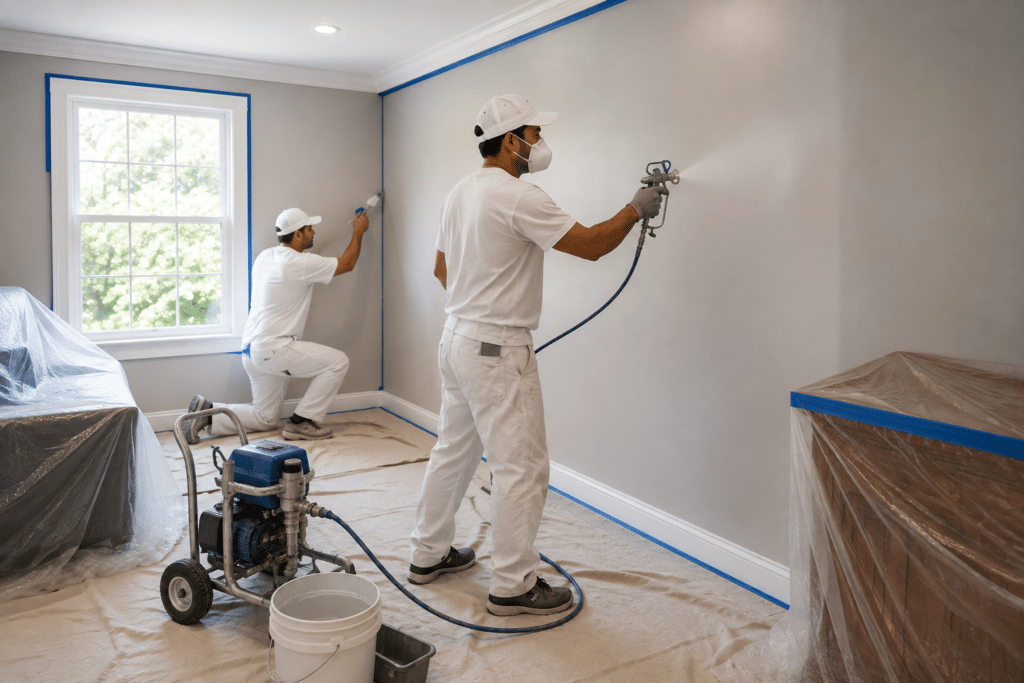
A typical interior repaint can take a DIYer 40 to 80 hours depending on skill level and room size. Professional crews cover the same square footage in a fraction of that time, partly through experience and partly through tools like sprayers, proper extension ladders, and commercial-grade tape that creates genuinely clean lines instead of bleed-through edges.
Crews Also Divide Labor Efficiently
On a professional job, one person can be prepping a wall while another is already cutting in trim elsewhere. That kind of parallel workflow doesn’t exist when it’s one homeowner working solo on weekends.
How Long the Results Actually Last
The real payoff of hiring a professional shows up years down the road, not on move-in day.
A Few Years vs. A Decade
A rushed DIY paint job, especially one with inadequate prep, can start peeling or fading within two to three years. A properly prepped and applied professional job, by contrast, can realistically last 8 to 10 years before it needs attention again. That difference in longevity usually outweighs whatever was saved upfront by skipping professional help.
When DIY Painting Actually Makes Sense
None of this means DIY is always the wrong call. For a low-traffic guest room, a closet, or a small accent wall where the stakes are genuinely low, DIY can be a satisfying, cost-effective option. It’s also reasonable when the budget is tight and the timeline is flexible enough to absorb a few mistakes along the way. The distinction really comes down to visibility and complexity: high-traffic rooms, exteriors, cabinets, and anything involving heights or extensive prep tend to be where professional help pays for itself.
Get Better Painting Results With Professional Help
At the end of the day, the case for professional house painters comes down to what’s actually being protected: your time, your budget, and how long the finished result holds up. Professional experience shows up in the prep work you don’t see, the tools that make a job faster and cleaner, and a finish that’s built to last years instead of a couple of seasons.
McCarthy Painting provides comprehensive commercial and residential painting services based in the San Francisco Bay Area, California. At McCarthy Painting, we provide expert residential and commercial painting services across San Francisco, Marin, and surrounding California areas, including specialized protective coatings, surface preparation, and long-lasting exterior solutions. Our team ensures proper application and durability for both homes and commercial properties, delivering high-quality finishes built to withstand time and weather.
Ready to get a professional finish without the DIY guesswork? Contact us today at 415-383-2640 to learn more about our Residential, Commercial, and full range of services.

Frequently Asked Questions
Is it worth hiring a professional painter for just one room?
It depends on the room. High-visibility spaces like living rooms or entryways often benefit most from professional work, while a low-traffic guest room is a reasonable place to practice DIY.
How do I know if a painting company is trustworthy before hiring them?
Check for licensing, insurance, and real customer reviews with photos of completed work. A written estimate with a clear scope, timeline, and warranty is also a strong sign of a professional operation.
Can I mix DIY and professional work on the same project?
Yes. Some homeowners handle simple prep or low-stakes rooms themselves and bring in professionals for exteriors, high ceilings, or rooms where finish quality matters most.
Do professional painters clean up and remove old paint materials?
Most professional painting companies handle full cleanup, including drop cloths, tape removal, and proper disposal of old paint and materials, something DIYers often underestimate when planning their own project.
Does McCarthy Painting offer both interior and exterior professional painting services?
Yes. McCarthy Painting provides both interior and exterior residential and commercial painting across the San Francisco Bay Area and Marin County, backed by decades of experience and proper surface preparation on every job.

Editorial Review by Greg Owens, Owner & CEO, McCarthy Painting Company
Greg Owens is the Owner and CEO of McCarthy Painting Company, a family-owned painting contractor serving Marin County and the San Francisco Bay Area since 1969. Having worked with the company since 1990, Greg has more than three decades of hands-on experience in residential and commercial painting, surface preparation, protective coatings, wood restoration, and long-term property maintenance. Under his leadership, McCarthy Painting has completed projects for homeowners, commercial property managers, and organizations throughout the Bay Area while maintaining a reputation for quality craftsmanship, professionalism, and exceptional customer service. Greg reviews educational content to help property owners make informed decisions about painting, maintenance, and protecting their investment.