
Key Takeaways
- Paint acts as a physical barrier against moisture, sun, and biological growth, not just a cosmetic finish
- Untreated moisture infiltration is one of the leading causes of structural wood damage in coastal and foggy climates
- UV exposure breaks down paint’s chemical bonds over time, leading to fading, chalking, and eventual cracking
- Mold and mildew thrive in the microscopic gaps that appear once paint starts failing
- Chalking, cracking, and bubbling are early warning signs that a home’s protective barrier is compromised
- A properly applied exterior paint job typically protects a home for 8 to 10 years before it needs attention again
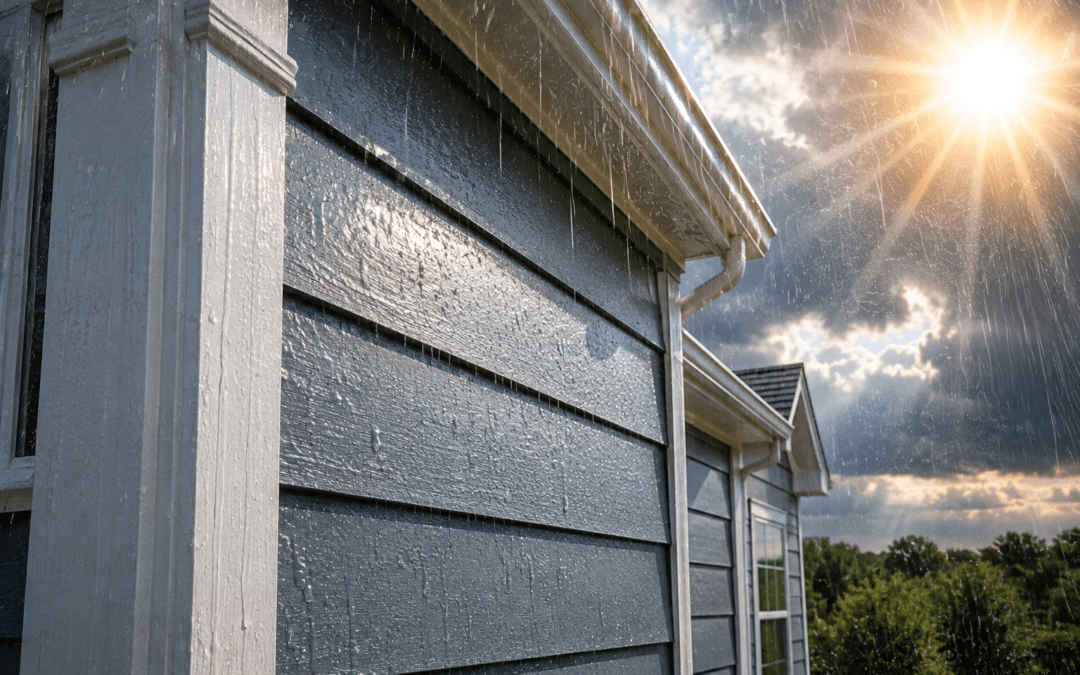
Residential exterior painting protection works by creating a physical barrier against moisture, UV rays, and mold, preventing structural damage before it starts.
When people think about painting their home’s exterior, the first thing that usually comes to mind is curb appeal. A fresh coat makes a house look newer, cleaner, more cared for. But that’s really just the visible half of the story. Underneath the color is a functional barrier doing quiet, constant work: keeping rain out of your siding, keeping the sun from breaking down your trim, and keeping the kind of moisture that leads to rot and mold from ever getting a foothold. Residential exterior painting protection isn’t a marketing phrase, it’s a real, measurable function that determines how well a home holds up against years of weather exposure. This article breaks down exactly how that protection works, what happens when it starts to fail, and how long you can realistically expect it to last.
How Does Paint Actually Protect a House From Weather Damage?
Exterior paint is essentially a sealed film applied over your home’s siding, trim, and other exposed surfaces. Once cured, that film physically blocks water, sunlight, and airborne contaminants from reaching the material underneath, whether that’s wood, stucco, or fiber cement.
It’s a Barrier, Not Just a Coating
The distinction matters. A coating implies something purely surface-level. A barrier implies something doing active protective work. Quality exterior paint is formulated with resins and additives specifically designed to flex with temperature changes, resist water penetration, and slow down the breakdown that constant sun exposure causes. When that barrier is intact, the material underneath stays dry, stable, and protected. When it fails, whatever is underneath is exposed to the same conditions the paint was supposed to block.
Moisture Protection: Keeping Rain and Fog Out of Your Home’s Structure
In climates with regular rain, coastal fog, or high humidity, moisture is usually the single biggest threat to a home’s exterior. Wood siding, trim, and fascia boards absorb water readily if they’re not properly sealed, and that absorbed moisture doesn’t just sit there, it creates the exact conditions wood rot and mold need to take hold.
Why Sealed Seams and Edges Matter Most
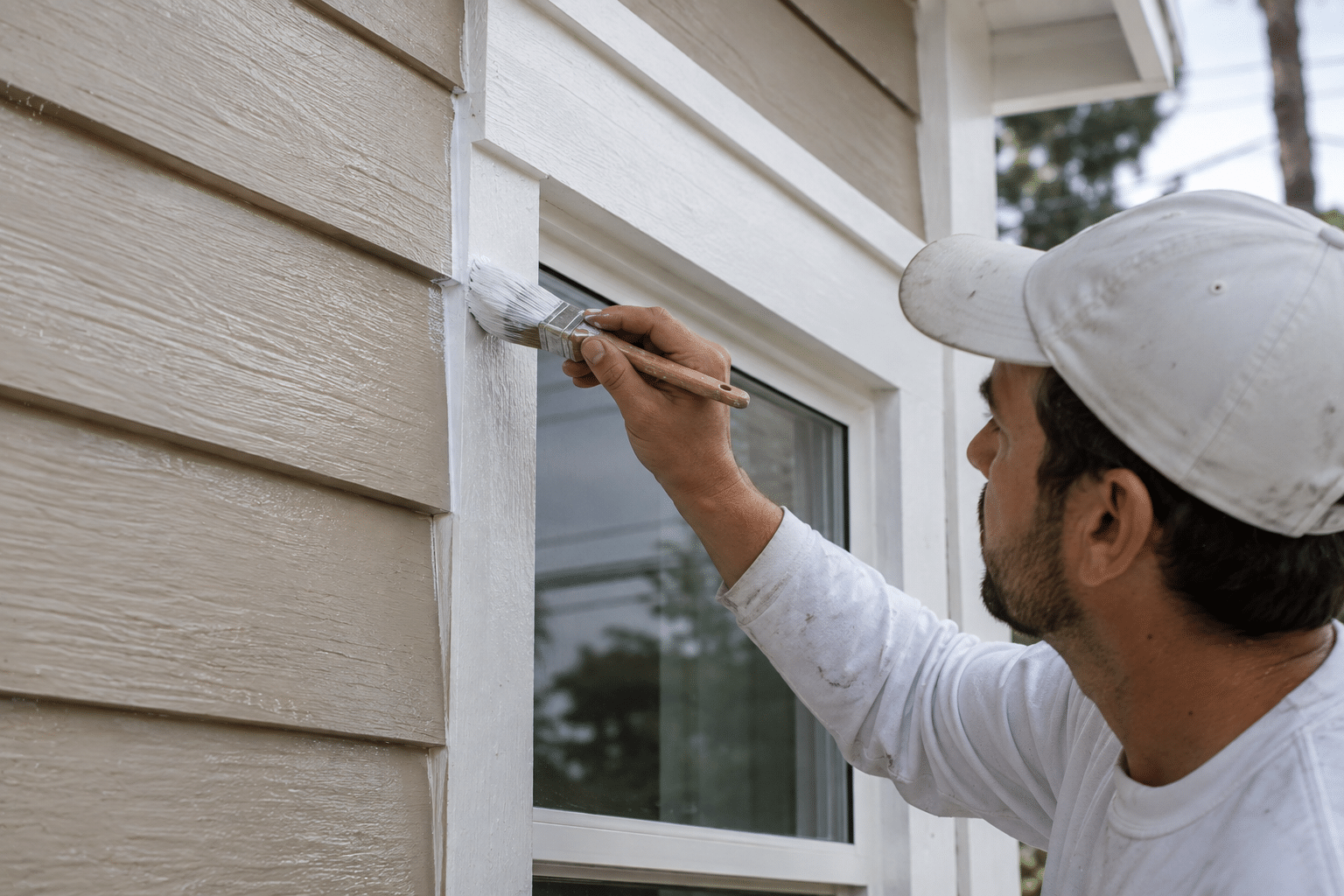
Most moisture problems don’t start in the middle of a flat wall. They start at seams, corners, window trim, and anywhere two materials meet. These are the spots most likely to have hairline gaps where water can work its way in, especially after repeated freeze-thaw or wet-dry cycles. A properly applied paint job includes caulking these transition points before painting, which is often the difference between a home that sheds water cleanly and one that slowly absorbs it year after year.
UV Protection: Preventing Sun Damage and Fading
Sun exposure does damage that’s easy to underestimate because it happens slowly. Ultraviolet radiation breaks down the chemical bonds in paint over time, which is why paint on a sun-facing wall typically fades and deteriorates faster than paint on a shaded side of the same house.
Chalking Is the First Visible Sign
As UV breakdown progresses, paint often starts “chalking,” developing a fine, powdery residue on the surface that rubs off on your hand if you touch it. This is a direct sign that the paint’s protective resin is breaking down. Left unaddressed, chalking eventually leads to cracking and loss of adhesion, at which point the surface underneath is no longer protected from either sun or moisture.
Mold, Mildew, and Wood Rot Prevention
Mold and mildew don’t appear randomly. They grow where moisture and organic material are both present, conditions that show up almost immediately once a paint film starts to fail and allow water to get underneath it.
The Moisture-to-Rot Pipeline
Here’s the pattern that plays out repeatedly on homes with failing exterior paint: a small crack or gap lets moisture in, that trapped moisture creates a damp environment behind the surface, and that damp environment becomes exactly what wood-decay fungi need to establish themselves. By the time visible rot appears, the underlying damage has often been developing for months. Intact, properly applied paint prevents this entire chain from starting in the first place, since it keeps the surface dry enough that moisture never gets the chance to settle in.
Signs Your Home’s Paint Is No Longer Protecting It
Knowing what to look for can help you catch a failing paint job before it turns into a repair bill.
Warning Signs Worth Taking Seriously
- Chalking or a powdery residue on exterior surfaces
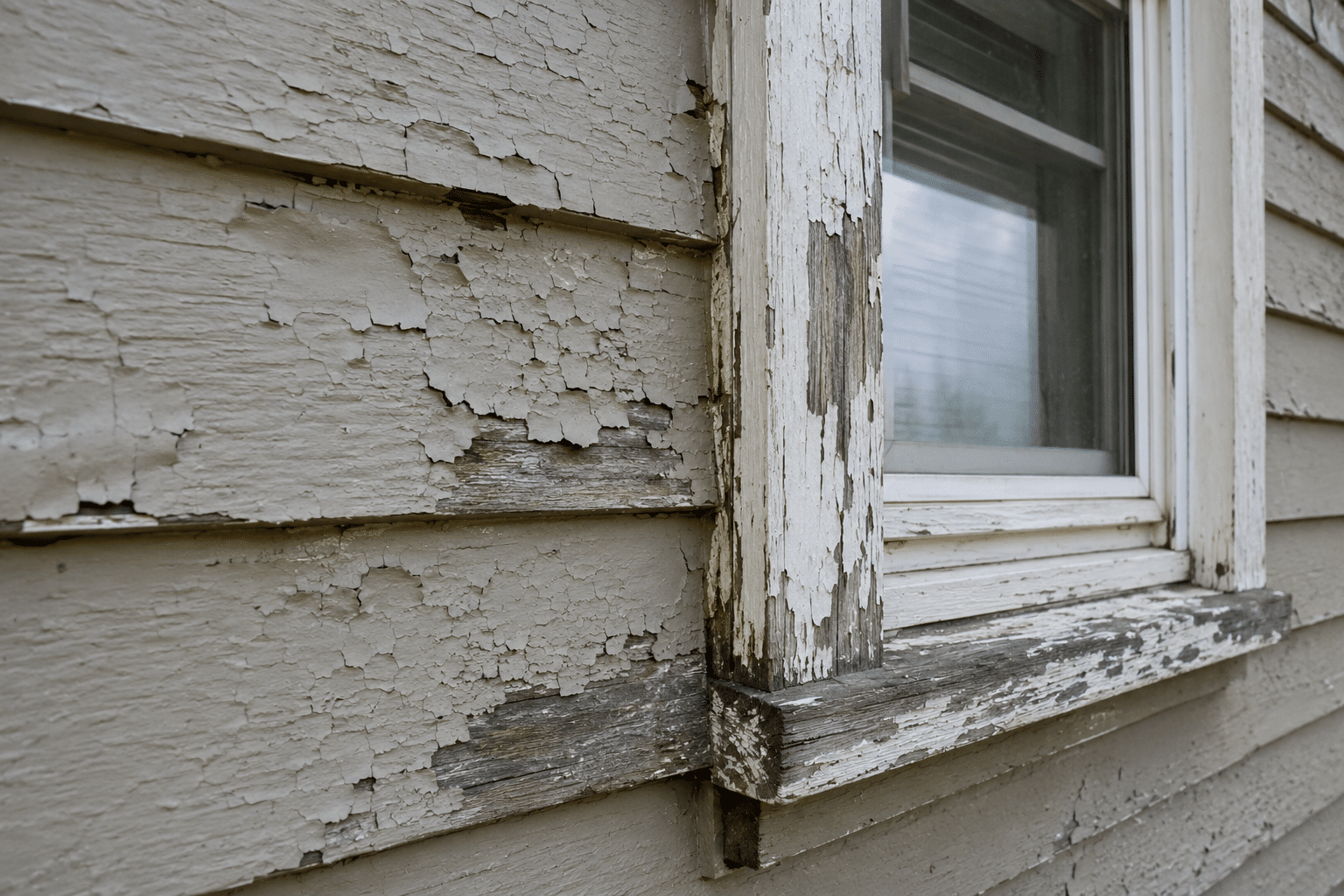
- Visible cracking, especially in a spiderweb or alligator-skin pattern
- Peeling or bubbling paint, particularly near trim, windows, or roof lines
- Soft or spongy spots on wood trim or siding
- Discoloration or dark streaking that doesn’t wash off, often an early mold or mildew sign
- Faded color that looks noticeably different from when the home was last painted
If you’re noticing more than one of these at once, it’s usually a sign the protective barrier has already been compromised in that area, not just a cosmetic issue waiting to happen.
How Long Does Weather-Protective Paint Actually Last?
With proper surface preparation and quality materials, a residential exterior paint job typically holds up for 8 to 10 years before it needs a full repaint. That range shifts depending on climate exposure. Homes facing direct sun, coastal salt air, or heavy seasonal moisture tend to land on the shorter end of that range, while more sheltered homes in milder conditions can sometimes stretch beyond it.
Why Prep Work Determines Where You Land in That Range
The biggest factor separating a paint job that lasts 4 years from one that lasts a full decade isn’t usually the paint brand, it’s the preparation done before that paint ever goes on. Scraping, sanding, priming bare wood, and properly caulking seams all affect how well that paint bonds and how long it holds its protective seal. Skipping these steps is the most common reason a paint job fails years earlier than it should have.
Protecting Your Home Starts With the Right Paint Job
At the end of the day, residential exterior painting protection is about far more than appearance. It’s the barrier standing between your home and years of sun, rain, and moisture exposure, and how well that barrier is applied determines whether small weather exposure turns into a cosmetic non-issue or an expensive structural repair down the line.
McCarthy Painting provides comprehensive commercial and residential painting services based in the San Francisco Bay Area, California. We offer expert residential and commercial painting across San Francisco, Marin, and surrounding California areas, including specialized protective coatings, surface preparation, and long-lasting exterior solutions. Our team ensures proper application and durability for both homes and commercial properties, delivering high-quality finishes built to withstand time and weather.
Ready to protect your home before the next season of weather takes its toll? Contact us today at 415-383-2640 to learn more about our Residential, Commercial, and full range of services. Contact us now!

Frequently Asked Questions
Does the color of my paint affect how well it protects my home?
Yes. Darker colors absorb more heat and UV radiation, which can accelerate fading and cracking, while lighter colors tend to reflect heat and hold up longer, especially on sun-exposed walls.
Can I paint over existing damage instead of repairing it first?
No. Painting over cracks, rot, or moisture damage only hides the problem temporarily. The underlying issue needs to be repaired first, otherwise the new paint will fail in the same spot.
How does painting compare to other weatherproofing methods, like siding replacement?
Painting is generally far more cost-effective than full siding replacement and, when done with proper prep and quality materials, provides comparable protection for a fraction of the cost.
Does my home’s climate affect how often I need to repaint?
Yes. Homes in coastal, foggy, or high-UV climates typically need repainting more often than homes in milder, drier climates, since moisture and sun exposure are the two biggest factors in paint breakdown.
Does McCarthy Painting use weather-resistant paint options for Bay Area homes?
Yes. McCarthy Painting selects coatings suited to Marin and the Bay Area’s specific climate, including fog, coastal moisture, and sun exposure, rather than a one-size-fits-all approach.

Editorial Review by Greg Owens, Owner & CEO, McCarthy Painting Company
Greg Owens is the Owner and CEO of McCarthy Painting Company, a family-owned painting contractor serving Marin County and the San Francisco Bay Area since 1969. Having worked with the company since 1990, Greg has more than three decades of hands-on experience in residential and commercial painting, surface preparation, protective coatings, wood restoration, and long-term property maintenance. Under his leadership, McCarthy Painting has completed projects for homeowners, commercial property managers, and organizations throughout the Bay Area while maintaining a reputation for quality craftsmanship, professionalism, and exceptional customer service. Greg reviews educational content to help property owners make informed decisions about painting, maintenance, and protecting their investment.