

Key Takeaways
|
Gutters channel rainwater off your roof and away from your home’s foundation, walls, and landscaping, preventing water damage, erosion, leaks, and costly structural problems.
A roof sheds water well, but it has no opinion about where that water lands. Gutters give it direction. Understanding what gutters are used for is the first step toward protecting the biggest investment you will ever make: your home.
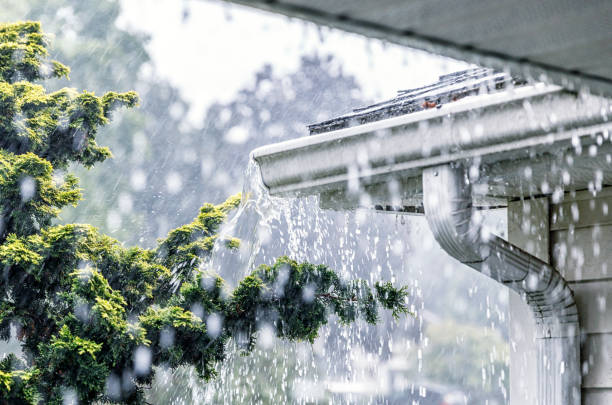
In a single heavy storm, the roof of an average home can shed hundreds of gallons of water. Without a system to catch and redirect it, all of that volume falls straight to the ground along the edge of the house, right where it can do the most harm. Gutters exist to take control of that water and send it somewhere safe, turning an uncontrolled flood into a managed flow.
What Are Gutters and How Do They Work?
Gutters are narrow channels installed along the lower edge of your roofline. Their job is to catch the water running off the roof and route it to a controlled exit instead of letting it spill randomly around your home.
The system works on a simple principle: gravity. Water naturally flows to the lowest point, so gutters are mounted with a slight slope, usually about a quarter inch of drop for every ten feet of run. That gentle pitch keeps water moving toward the downspouts rather than sitting in the channel. The downspouts then carry it down and release it well away from the house. When the slope, sizing, and placement are right, the whole system handles a downpour without overflowing.
The Basic Parts of a Gutter System
A complete gutter system includes a few working pieces:
- Gutters (the troughs): the horizontal channels that collect roof runoff.
- Downspouts: the vertical pipes that carry water to the ground.
- Hangers and outlets: the hardware that holds everything in place and keeps water moving one way.
- Splash blocks or extensions: the pieces that push water several feet from the foundation.
When it rains, water runs down the roof, drops into the gutter, travels to the nearest downspout, and exits clear of your walls. Proper pitch keeps it moving instead of pooling.

Common Gutter Materials
The material you choose affects cost, lifespan, and upkeep. Aluminum is the most popular because it is affordable, rust-resistant, and lightweight. Copper costs more but lasts for decades and develops a distinctive patina. Galvanized steel is strong but can rust over the years, while vinyl is the cheapest choice and works best in milder climates. The right pick balances budget, local weather, and how long you plan to stay in the home.
Why Are Gutters Important? Key Benefits for Your Home
Gutters prove their value the moment they fail, quietly preventing thousands of dollars in damage each rainy season.
Protecting What You Cannot Easily See
The biggest benefits happen out of sight. Here is where gutters earn their keep:
- Foundation protection: they stop water from pooling against the base of your home.
- Siding and paint preservation: controlled drainage keeps surfaces dry and helps paint last longer.
- Landscape defense: prevents soil erosion and protects flower beds from washing out.
- Basement safety: by moving water away, they reduce the risk of seepage and flooding.
In the Bay Area, where winter brings months of steady rain, these benefits are real: the difference between a dry season and a costly repair.
How Gutters Protect Your Roof and Foundation
Your roof and foundation sit at opposite ends of the house, but gutters protect both. Up top, they keep water from backing up under shingles, where it can rot the roof deck and fascia. Down low, they keep the soil around your foundation stable.
When water repeatedly saturates the soil next to your home, it expands and contracts, pressuring the foundation walls and leading to cracks and settling. Gutters interrupt that cycle by carrying water away before it can soak in, which is exactly what gutters are used for in the long-term health of a structure.
What Happens if a Home Doesn’t Have Gutters?
A home without gutters runs an unnecessary risk every time it rains. Runoff hits the ground in a concentrated line at the base of the walls, creating predictable problems: trenches in the landscaping, mud on the siding, water seeping into basements, and moisture wicking into the foundation.
The damage tends to build slowly, which is what makes it dangerous. A homeowner may not notice anything for a season or two, then discover peeling paint, soft fascia boards, or a musty basement that all trace back to the same cause. In older homes especially, this constant exposure speeds up wood rot, mold growth, and paint failure. We have seen exterior paint jobs cut short by years simply because nothing was directing water away from the walls. By the time the symptoms appear, the cheaper fix has often already passed.
Signs Your Gutters Need Repair or Replacement
Gutters give plenty of warning before they fail, and reading those signs early saves you from emergency repairs mid-storm.
Warning Signs to Watch For
A couple of times a year, walk your home’s perimeter and look for these red flags:
- Sagging or pulling away from the roofline, signaling loose hangers or trapped debris.
- Visible rust, cracks, or holes along the troughs or seams.
- Water overflowing the edges during rain, usually from clogs or poor slope.
- Peeling paint or staining on the siding directly below the gutters.
- Pooling water or mildew near the foundation after storms.
A few can be fixed with cleaning or minor repairs. When rust and sagging appear across the whole system, replacement is the smarter call.
How to Maintain Your Gutters for Long-Term Performance
A Simple Seasonal Routine
For most homes, twice a year is the right cadence: once in late spring and again in fall before the heavy rains. During each visit, clear out leaves and debris, flush the gutters and downspouts with a hose, confirm water drains freely, and tighten loose hardware. After a major storm, a quick check catches clogs early. With mature trees nearby, you may need to clean more often, and gutter guards reduce how much debris collects.
When to Call a Professional
A single-story home is usually a safe DIY job with a sturdy ladder and gloves. For two-story homes, steep roofs, or hard-to-reach areas, hiring a professional is safer and faster. A trained crew also spots early rot, failing seams, or paint damage and untrained eye misses, catching small problems before they turn expensive.

Are Rain Gutters Worth It?
For the overwhelming majority of homes, yes. Gutters guard against some of the most expensive repairs a homeowner can face: foundation damage, wood rot, and water intrusion. Their cost is small next to repairing a cracked foundation or a flooded basement, and that math only gets clearer in regions with real rainfall.
There are a few exceptions. Homes in very dry climates, or properties with deep roof overhangs and well-graded soil that already moves water away, may rely on gutters less. But for the typical home, and especially in rainy regions like Northern California, gutters are not a luxury. They are a proven line of defense that pays for itself many times over.
Why Hire McCarthy Painting for Gutter Cleaning?
So, what are gutters for? They keep water working for your home instead of against it, protecting your roof, foundation, siding, and landscaping season after season. Keeping that protection in place takes ongoing care, from clean, well-maintained gutters to quality exterior coatings that seal out moisture, and that is where McCarthy Painting comes in. We provide a wide range of painting services as a trusted Bay Area Commercial Painting Contractor and Residential Painter based in Marin and the San Francisco Bay Area, California, USA.
At McCarthy Painting, we provide expert residential and commercial painting services across San Francisco, Marin, and surrounding California areas, including specialized protective coatings, surface preparation, and long-lasting exterior solutions. Our team ensures proper application and durability for both homes and commercial properties, delivering high-quality finishes built to withstand time and weather. As a trusted Bay Area commercial painting contractor and residential painter based in Marin and the San Francisco Bay Area, we are here to help. Contact us today at 415-383-2640.
- Residential Painting Services: Detailed interior and exterior painting for homes, with careful prep, protective coatings, and finishes built for Bay Area weather.
- Commercial Painting Services: Reliable, schedule-friendly painting for offices, retail spaces, and large facilities, backed by more than 55 years of experience.
- Our Services: From surface preparation and protective coatings to full exterior repaints, we keep your property looking its best and lasting longer.

Frequently Asked Questions
How often should I clean my gutters?
Clean twice a year, in spring and fall. With many trees nearby, you may need to clean every few months to prevent clogs.
Can clogged gutters cause water damage inside my home?
Yes. When gutters clog, water backs up and overflows, seeping into walls, ceilings, and basements and causing leaks, mold, and damage.
Are gutter guards worth installing?
For homes surrounded by trees, gutter guards reduce debris buildup and cleaning frequency, though they do not eliminate maintenance.
How do I know if my gutters are the right size for my home?
Gutter size depends on your roof area, slope, and local rainfall. Large or steep roofs in rainy regions often need wider gutters and extra downspouts.
When should I replace my gutters instead of repairing them?
Repair makes sense for isolated leaks or loose hardware. When you see widespread rust, sagging, and separated seams, replacement is the better investment.

Editorial Review by Greg Owens, Owner & CEO, McCarthy Painting Company
Greg Owens is the Owner and CEO of McCarthy Painting Company, a family-owned painting contractor serving Marin County and the San Francisco Bay Area since 1969. Having worked with the company since 1990, Greg has more than three decades of hands-on experience in residential and commercial painting, surface preparation, protective coatings, wood restoration, and long-term property maintenance. Under his leadership, McCarthy Painting has completed projects for homeowners, commercial property managers, and organizations throughout the Bay Area while maintaining a reputation for quality craftsmanship, professionalism, and exceptional customer service. Greg reviews educational content to help property owners make informed decisions about painting, maintenance, and protecting their investment.