
Key Takeaways
- General contractors commonly add a 25 to 35 percent markup when they subcontract out painting work
- Commercial painters focus exclusively on painting, which brings specialized skill that a generalist crew often can’t match
- Dedicated painting crews can schedule around business hours to reduce disruption to daily operations
- Commercial-grade materials and proper application directly affect how long a repaint lasts
- A general contractor still adds real value when painting is one piece of a larger, multi-trade renovation
Commercial Painters vs. General Contractors: What’s the Difference?
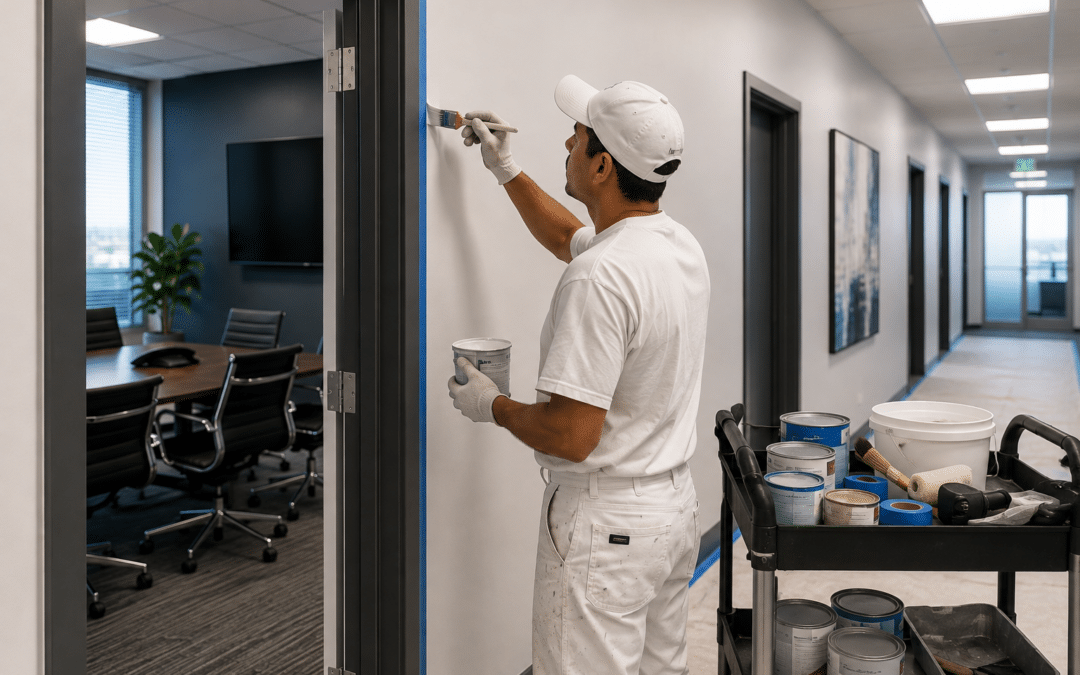
A general contractor is a project manager first. Their job is coordinating multiple trades, electrical, plumbing, framing, flooring, painting, into one cohesive timeline. Painting is just one line item among many, and it’s often subcontracted out to a painting company anyway, with the general contractor adding a management fee on top. A commercial painter, by contrast, is a specialist. Painting is the entire business, not one task among several. That distinction matters more than it might seem at first glance, because it changes who you’re actually talking to when something needs adjusting, who’s directly accountable for the finished result, and how much of your budget goes toward the actual work versus project oversight.Where This Distinction Actually Matters
If your business needs new flooring, an office reconfiguration, and a fresh coat of paint all at once, a general contractor’s coordination genuinely helps. But if painting is the only scope, you’re paying for management layers you don’t need.
Cost Comparison: Commercial Painter Pricing vs. General Contractor Markup
This is where the difference in commercial painters vs general contractors becomes concrete rather than theoretical. General contractors typically mark up subcontracted work, including painting, by 25 to 35 percent to cover their project management and scheduling overhead. On a mid-sized commercial repaint, that markup alone can add thousands of dollars to a project where the actual painting work never changes. Hiring a commercial painter directly removes that layer. You’re paying the company doing the work, not a management fee on top of it. That doesn’t mean commercial painters are always cheaper across every scenario, but for a painting-only project, it’s difficult to justify paying a markup for coordination that doesn’t need to happen.What This Looks Like in Practice
A business owner comparing quotes might see a general contractor’s bundled quote come in noticeably higher than a direct quote from a painting company for the identical scope of work, same square footage, same paint quality, same timeline. The difference is almost entirely the management fee.Specialized Expertise: Why Painting Skill Level Matters
Painting looks simple until you’re the one responsible for it holding up. Commercial painters spend their careers solving the exact problems that come with painting occupied office buildings, retail storefronts, and large commercial surfaces: uneven substrates, moisture-prone stucco, high ceilings, and tight timelines around business hours. A general contractor’s crew might handle painting competently on a standard interior job, but they’re rarely doing it every single day the way a dedicated painting company is. That repetition builds a kind of pattern recognition, knowing which primer a specific surface needs, how a coating will behave in a given climate, where a rushed job is likely to fail first, that’s hard to replicate with a generalist crew juggling five different trades.Handling the Unexpected
When something unusual comes up mid-project, old lead paint on a historic storefront, unexpected water damage behind a wall, a specialist painter has typically seen it before and knows how to adjust without derailing the whole timeline.Minimizing Disruption to Business Operations
For most businesses, the real cost of a repaint isn’t just the invoice, it’s the disruption. A dedicated commercial painting crew can work around your operating hours, moving fast during off-hours, weekends, or scheduled closures, precisely because painting is their sole focus and their whole crew is dedicated to it. A general contractor juggling multiple trades on one project often has less flexibility here. If the electrician runs long, the painting schedule shifts too, even though painting was never the bottleneck. That kind of scheduling drag is common when painting is treated as a subordinate task rather than the primary job.Scheduling Around a Working Business
Commercial painters who specialize in occupied buildings, offices, retail spaces, restaurants, tend to have refined processes for sectioning off work areas, minimizing odor and mess, and keeping a business functional while the work happens around it.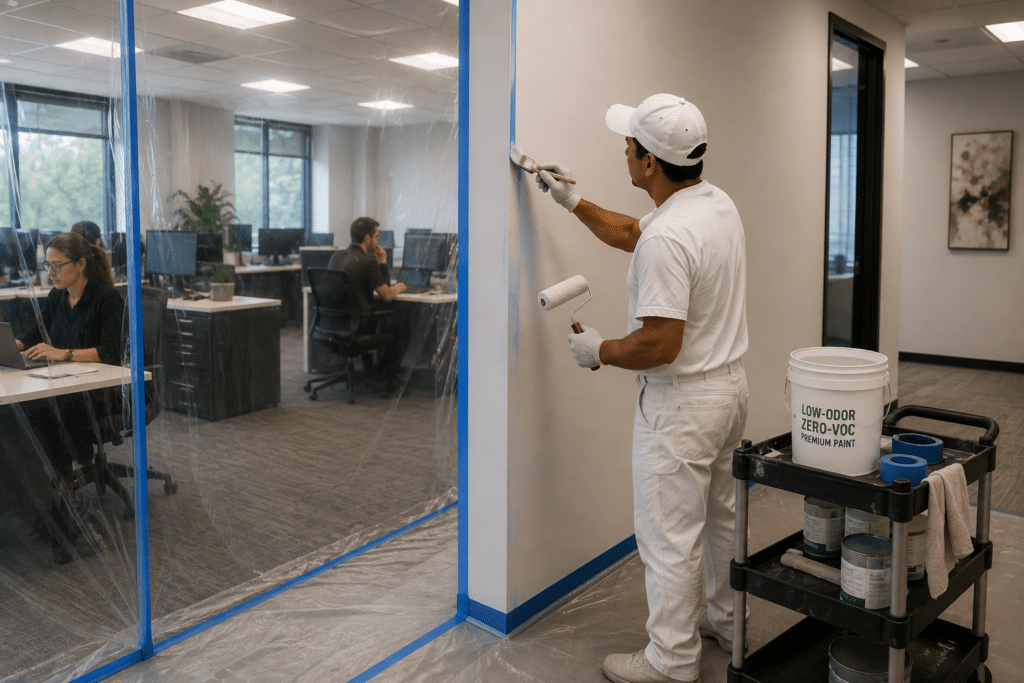
Commercial-Grade Materials, Equipment, and Long-Term Value
The materials and equipment a specialist painting company invests in are built specifically for commercial-scale, long-duration performance, not general-purpose use across a dozen different trade tasks. That includes access to commercial-grade coatings, proper spray equipment for large surfaces, and the surface-prep tools needed to make a coating actually adhere and last. This matters most over time. A properly prepped and coated commercial exterior can realistically go 8 to 10 years before it needs attention again. A rushed job with inadequate prep or the wrong coating can start failing in as little as three or four years. The upfront cost difference between doing it right and doing it fast rarely holds up once you calculate the cost of repainting twice as often.Why Prep Work Is the Real Differentiator
Ask any experienced painter and they’ll tell you the same thing: the paint itself matters less than what happens before it goes on. Cleaning, patching, priming, and addressing moisture issues upfront is what actually determines how long a paint job lasts.How to Vet a Commercial Painting Company
Not every painting company operates at the same standard, so a bit of due diligence upfront protects the investment either way.Questions Worth Asking Before You Hire
- Are you licensed and insured specifically for commercial work?
- Can you provide examples of similar commercial projects, ideally in a comparable industry?
- What’s your process for minimizing disruption to an occupied business?
- What warranty do you offer on labor and materials?
- How do you handle unexpected issues found during surface prep?
When a General Contractor Might Still Be the Right Choice
None of this means a general contractor is the wrong call in every situation. When painting is genuinely one piece of a larger renovation, a full office buildout, a multi-trade tenant improvement, a ground-up commercial build, a general contractor’s coordination across electrical, flooring, drywall, and painting adds real, tangible value. In that context, the management fee is paying for something that actually needs to happen: keeping a dozen moving pieces on schedule. The distinction really comes down to scope. Painting as the whole job favors hiring a commercial painter directly. Painting as one piece of a much larger project often favors going through a general contractor who’s already coordinating everything else.What This Means for Your Business
At the end of the day, deciding between commercial painters vs general contractors isn’t about which option is universally better, it’s about matching the hiring decision to the actual scope of the work. When painting is the primary job, hiring a commercial painter directly typically means better pricing, faster scheduling, and a single team accountable for the finished result. When painting is one piece of a larger renovation involving multiple trades, a general contractor’s coordination can still add real value. McCarthy Painting provides comprehensive commercial and residential painting services based in the San Francisco Bay Area, California. We offer expert residential and commercial painting across San Francisco, Marin, and surrounding California areas, including specialized protective coatings, surface preparation, and long-lasting exterior solutions. Our team ensures proper application and durability for both homes and commercial properties, delivering high-quality finishes built to withstand time and weather. Ready to talk through your next commercial or residential project? Contact us today at 415-383-2640 to learn more about our Residential, Commercial, and full range of services.
Frequently Asked Questions
Do I need to hire a commercial painter for a small business?
Even small businesses benefit from hiring a specialist, since a professional finish affects how customers perceive the space regardless of square footage.Can I hire a commercial painter directly, or do I need a general contractor?
In most cases, you can hire a commercial painter directly, especially if painting is the only work being done. A general contractor becomes more useful when multiple trades need to be coordinated together.How far in advance should I schedule a commercial painting project?
For most commercial projects, booking four to six weeks ahead helps ensure the right crew availability, especially during busier seasons.What information should I provide when requesting a commercial painting estimate?
Square footage, current surface condition, desired timeline, and any operational constraints (like needing work done after hours) all help a painter provide an accurate estimate.What should I check before hiring a commercial painting contractor?
Confirm licensing and insurance, ask for examples of similar commercial work, and clarify what warranty is offered on both labor and materials before signing anything.
Editorial Review by Greg Owens, Owner & CEO, McCarthy Painting Company
Greg Owens is the Owner and CEO of McCarthy Painting Company, a family-owned painting contractor serving Marin County and the San Francisco Bay Area since 1969. Having worked with the company since 1990, Greg has more than three decades of hands-on experience in residential and commercial painting, surface preparation, protective coatings, wood restoration, and long-term property maintenance. Under his leadership, McCarthy Painting has completed projects for homeowners, commercial property managers, and organizations throughout the Bay Area while maintaining a reputation for quality craftsmanship, professionalism, and exceptional customer service. Greg reviews educational content to help property owners make informed decisions about painting, maintenance, and protecting their investment.