
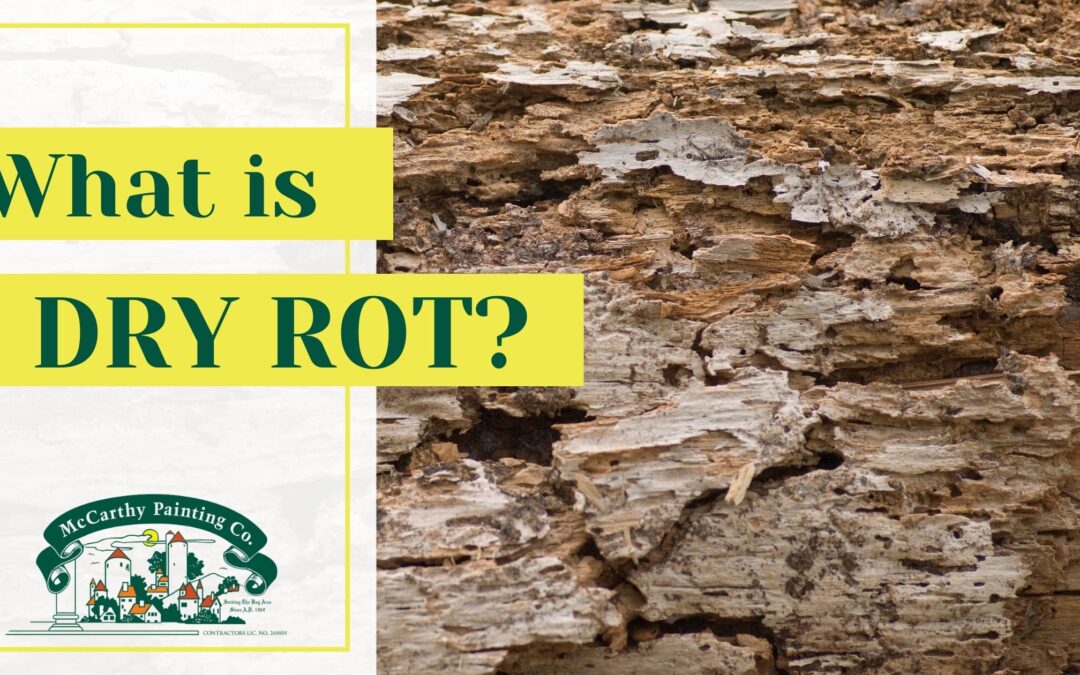
Key Takeaways
- Dry rot is caused by the fungus Serpula lacrymans, which needs at least 20% moisture content to grow, despite the misleading “dry” name
- Common trouble spots include exterior doors, windows, decks, basements, attics, crawl spaces, and areas under sinks or around bathtubs
- The fungus progresses through 4 stages: spores, hyphae, mycelium, and fruiting bodies, each with distinct visual signs
- Warped timber, cube-shaped cracks (cuboidal fractures), and a musty smell are the clearest indicators of an active infestation
- Minor cases can be treated with epoxy filling, but extensive damage requires removing and replacing the affected timber
- Proper caulking, drainage maintenance, and quality paint with the right primer are the most effective prevention methods
- McCarthy Painting has over 50 years of experience identifying and repairing dry rot in Marin homes affected by fog and rain exposure
Dry rot is a fungal wood decay caused by moisture and poor ventilation that breaks down cellulose in timber, making it shrink, crack, and lose structural strength.
Establishing a beautiful home or a thriving business is no easy task and the process by which one acquires a house or a building is tedious, time-consuming and difficult. However, having a place to call your own where you can build a life or a dream makes it all worth it. But what could ruin such an aspiration? Two words: dry rot.
This ominous-sounding timber condition is widely considered as one of the worst types of fungal decay. It is so termed because the afflicted wood’s color turns brown and appears dry.
Dry rot is caused by the fungus Serpula lacrymans which tends to grow in damp and poorly ventilated conditions, such as when there are leaky pipes or drainage issues somewhere in the building. This reason is why “dry rot” is a misnomer, as the fungus actually requires a moisture content of at least 20% for it to grow. Once it does make its entrance however, it can be very tricky to get rid of.
The fungus destroys the cellulose within the wood, making the timber shrink and appear dry. This condition then predisposes it to cube-shaped cracks or bits—termed cuboidal fractures.
Dry rot, if left untreated, can inflict serious damage to the wood, thus knowing how to spot and then get rid of it is incredibly important for any home or business owner.
How to Identify Dry Rot
To know how to identify this dreaded culprit or what areas of your place are at risk, it is best to remember the conditions that the fungus needs to thrive: dampness and poor ventilation. These places may either be those unseen and uncovered only when there’s renovation, or they may be hiding in plain sight—so much so, that we tend to overlook them. Thus, areas with improper waterproofing can lead to problematic results.
Pay close attention to the following areas as all it will take for dry rot to show up is a small gap in the wood that either wasn’t sealed properly from the elements, or is exposed constantly to dampness:
- Exterior Doors
- Windows
- Decks around the house
- Stairs
- Basement
- Attic
- Crawl spaces
- Floors underneath sinks or around bathtubs and showers
- Damaged roofs
But what exactly are the signs of dry rot? How will you know what to look for?
Dry rot fungus, like any other fungi, has a multi-step life cycle and each step has distinct features which can help you identify whether or not the wood has dry rot. These are the following:
- Spores: Although spores are generally found all over our environment to some degree, not all of them germinate into the fungus. However, once you start noticing patches of these on the wood on your property, then it is a clue that you might have an outbreak coming soon. These spores look just like orange or brown dust so keep a keen eye out.
- Hyphae: Hyphae are the second stage of dry rot. They branch out as long, thin, white strands both on the inside of the timber as well as outside. They look like white strings and can even look like spiderwebs.
- Mycelium: For fungi, mycelia are specialized structures used to transport nutrients and can propagate when it needs to expand its domain onto other timber. For dry rot, these vary in colors from gray to white.
- Fruiting Bodies: These bodies, otherwise known as sporophores, are the final stage of this fungus. They emit spores, spreading the rot to other parts of the building. These look more like mushrooms.
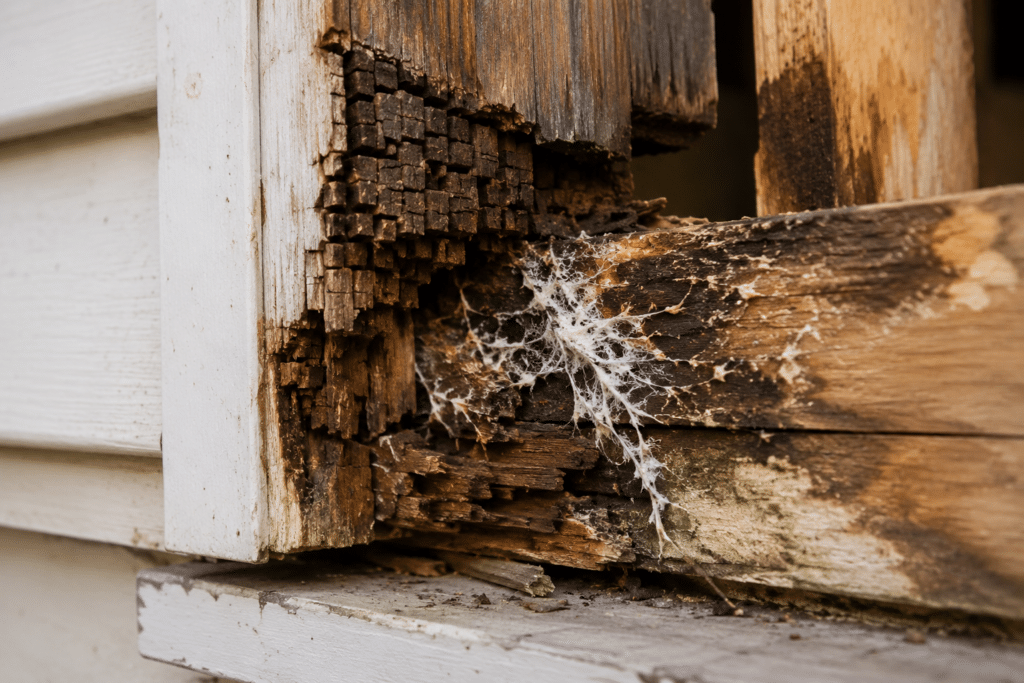
Besides the above mentioned qualities of the fungus itself however, you can also find many other clues that could point to the existence of dry rot in the infrastructure:
- Warped Timber: As was mentioned earlier, the fungus degrades the cellulose in wood and along with this, the water content of the wood is diminished. This causes warping or even shrinking of the timber.
- Cuboidal Fractures: Remember the characteristic cube-shaped pieces that result from the fungus acting on the wood. This could be a definitive clue that you have dry rot in the vicinity.
- The Smell: Dry rot has a distinctly damp or musty smell to it so it’s a good idea to not just keep your eyes open, but your nose as well.
Dry Rot Repair
Timber affected by dry rot is often no longer stable or easily treated. At the very least, the wood becomes discolored; at most, the wood could crumble under very little stress.
The initial step with repairing the damage is to first identify that the structure has dry rot in the first place. After this, elimination of the two main conditions the fungus needs is vital (dampness and poor ventilation). But if the areas affected are still poorly ventilated, e.g., crawl spaces or areas under sinks, even just eliminating the source of the moisture can already prevent the spread of the fungus. It may even be advised that you use a dehumidifier as well, to ensure moisture removal.
Leaky pipes, problematic roof tiles, windows and outside doors lacking proper caulking, penetration damp—whatever the cause of the dampness, once this issue is remedied, then you wouldn’t need to worry about the dry rot returning.
In minor cases wherein the wood has not warped and seems salvageable, the wood can be hardened and filled with epoxy. With more extensive damage however, the infected timber must be removed to prevent the spread of the rot. These timber will then be replaced with pre-treated ones to prevent a re-infestation.
How To Prevent Dry Rot
As with any problem, the best cure is definitely prevention. And with issues with dry rot, the most cost-effective way to combat it is to prevent its occurrence in the first place. Home and building maintenance, from keenly observing your surroundings, all the way to snappy problem-solving, is necessary to prevent dry rot.
Primary to prevent it is to keep your timber dry. Ensure that the roof is doing its job properly, keep your drainage pipes from leaking, sufficiently caulk the windows and exterior doors, assess any areas of your home that tend to collect water and solve the issue, all of these will help prevent dry rot from damaging your home or business.
Another important preventive measure you can undertake is to properly paint these areas, as good paint can help seal the cracks that the moisture can get into. Longer-lasting high quality paint, along with the proper primer may just be your best bet to prevent dry rot from getting into your home.
How McCarthy Painting Can Help
Marin homes, because of exposure to fog and rain, can be subject to Dry Rot. Luckily for you however, we at McCarthy Painting Co. have over 50 years of experience and expertise at both identifying dry rot and making minor repairs. Don’t let your home or business fall into the trap of dry rot. Let us help you, so you can rest assured that your dream home and business will continue to flourish in a beautifully maintained space, all with the help of McCarthy Painting, Co. Book a call now!

Frequently Asked Questions about dry rot:
How can I tell if my home has dry rot?
Dry rot often appears in areas exposed to moisture and poor ventilation. Common signs include warped or shrinking wood, cube-shaped cracks in timber, a musty odor, visible fungal growth, and discoloration. If you notice any of these warning signs, our team can help assess the affected areas and recommend appropriate repairs.
What causes dry rot in a home or commercial building?
Dry rot is caused by a fungus that thrives in damp, poorly ventilated environments. Leaking pipes, damaged roofs, inadequate caulking around windows and doors, and drainage issues can all create the moisture conditions needed for dry rot to develop. Identifying and correcting the source of moisture is essential to preventing further damage.
Can dry rot spread to other parts of my property?
Yes. If left untreated, dry rot can spread through timber and other vulnerable wooden structures. The fungus produces spores that can affect nearby wood when moisture conditions are favorable. Early detection and treatment are important to limit the extent of the damage and reduce repair costs.
Can dry rot be repaired, or does the wood need to be replaced?
The solution depends on the severity of the damage. In minor cases, affected wood may be strengthened and repaired using specialized fillers or epoxy products. However, severely damaged timber often needs to be removed and replaced to ensure the structural integrity of the building and prevent the rot from spreading.
How can McCarthy Painting help prevent dry rot?
In addition to identifying signs of dry rot and performing minor repairs, we help protect homes and businesses by properly preparing, sealing, and painting vulnerable wood surfaces. High-quality paint systems, combined with proper maintenance and moisture control, can help reduce the risk of dry rot and extend the life of your property’s exterior woodwork.